The best shotgun light for home defense puts out at least 600 lumens, locks onto the barrel or rail without shifting under recoil, and turns on instantly with a pressure switch or tail cap button. That brightness level matters because most home defense encounters happen in under three seconds, leaving no time to fumble with a dim or finicky light. Recoil is the real dealbreaker for cheaper units, since a 12-gauge blast can loosen mounts and crack lenses that a handgun light would never notice. A shotgun light also has to survive drops, moisture, and years of storage in a closet or safe without losing battery charge or going dark when you need it most.
Most home defense encounters happen in low light or total darkness, and a shotgun without a mounted light forces you to choose between identifying your target and keeping both hands ready to fire. A quality light needs at least 500 lumens to disorient an intruder and wash out a dark room, but recoil is the real test most buyers overlook. Cheap mounts loosen or shift after a handful of shells, throwing your aim off exactly when you need it most, so the hardware matters as much as the bulb.
Key Takeaways
- Look for a minimum output of 600 lumens, though 1,000 to 1,300 lumens gives you a stronger margin in larger rooms or through doorways.
- Recoil-rated mounting is non-negotiable; a light designed for an AR-15 rail may loosen within 20 to 50 rounds fired from a 12-gauge.
- Expect to spend between $90 and $350 for a light suited to defensive use, plus $15 to $60 for a proper mount if one is not included.
- Runtime of at least 60 to 90 minutes on a single charge or battery set is a reasonable baseline for a light kept staged near the bed.
- A pressure switch wired to the forend lets you activate the light without breaking your firing grip, which matters more in a real encounter than most people expect.
Why a Dedicated Weapon Light Matters for Shotgun Defense
A shotgun used for home defense is typically fired at distances under 15 yards, often in a hallway, stairwell, or bedroom doorway where ambient light is close to zero. According to firearms training data cited by organizations like the National Rifle Association’s Law Enforcement Division, most defensive shootings in the home occur in low light or total darkness. Without a mounted light, you are forced to either fire blind or fumble with a handheld flashlight while trying to keep your shotgun ready, which slows your reaction time and increases the chance of misidentifying a target.
A weapon-mounted light solves this by putting illumination exactly where your muzzle points. This is different from a flashlight taped to the barrel or held in your support hand, both of which shift your point of aim and reduce control over the shotgun’s recoil. The goal is not just to see, but to see and still maintain a stable, correctable firing position. That distinction is why dedicated weapon lights, built with recoil-rated mounts and pressure switches, outperform improvised setups in every practical test.
What Specs Actually Matter When Choosing a Shotgun Light
Lumen Output and Beam Distance
Six hundred lumens is generally treated as the practical floor for a home defense weapon light, since lower output struggles to overcome ambient light spill from streetlights or hallway fixtures. Many current models now push 1,000 to 1,300 lumens, which helps illuminate a threat at 20 to 30 feet without requiring you to aim the beam with precision. Beam distance ratings between 150 and 250 meters sound excessive for indoor use, but that extra throw actually improves peripheral spill, making it easier to see movement at the edges of a room.
Runtime and Battery Type
A light staged on a home defense shotgun should hold a charge or battery set for at least 60 to 90 minutes at full output, though most quality units rated for 1,000+ lumens will run for 1.5 to 2.5 hours before stepping down to a lower output mode. Rechargeable lithium-ion models (often using a proprietary battery or a standard 18650 cell) are common, but CR123A lithium primary cells remain popular for defensive setups because they hold a charge in storage for 8 to 10 years, which matters for a light that may sit unused for months.
Mounting Compatibility and Recoil Resistance
Shotguns generate substantially more recoil impulse than a rifle or pistol, and a mount not rated for that force can loosen or shift within 20 to 50 rounds. Look specifically for mounts marketed as “shotgun-rated” or tested to at least 500 rounds of 12-gauge buckshot without loosening. Most defensive shotguns use either a Magpul-style forend with an integrated M-LOK slot, a Mesa Tactical mount that clamps around the magazine tube, or a barrel clamp designed for smoothbore shotguns without a rail.
Activation Method
A pressure switch, usually wired along the forend and activated by your support-hand fingers, allows momentary or constant-on activation without shifting your grip. Many defensive shooters prefer this over a tail cap switch because it keeps both hands in a natural firing position. Some models offer a rocker switch built into the light body itself, which works but requires a small grip adjustment to reach.
Top Shotgun Lights for Home Defense in 2024
These five lights span different price points and mounting styles, and all show up regularly in home defense and tactical training circles.
1. Surefire DSF-500/590 Dedicated Forend
This forend replacement for the Remington 870 and Mossberg 500/590 builds a 600-lumen LED directly into the pump handle, so there’s no separate mount to loosen under recoil. It runs $300 to $340 and lasts about 1.25 hours on two CR123A batteries, with an ambidextrous switch you can hit from either hand.
2. Streamlight TL-Racker
Built for the Remington 870 and Mossberg 500, the TL-Racker puts out 1,000 lumens with a 246-meter beam for $120 to $150, one of the cheapest dedicated shotgun forend lights around. It runs 1.5 hours on three CR123A batteries and lets you disable strobe mode, which many defensive shooters prefer.
3. Cloud Defensive OWL (Optimized Weapon Light)
The OWL hits 1,300 lumens and mounts via M-LOK or Picatinny, so it fits far more shotguns than just the Remington and Mossberg pump guns. At $260 to $300, it runs on a rechargeable 18350 or 18650 battery for 1 to 1.75 hours. Several trainers have run it hard on 12-gauge platforms without a single mount failure.
4. Streamlight TLR-1 HL
This general-purpose light hits 1,000 lumens with a 283-meter beam and mounts to any Picatinny or Glock-style rail, so it works on shotguns with aftermarket rail forends like Magpul or Mesa Tactical. It costs $130 to $160 and runs about 1.75 hours on two CR123A batteries. Check that your forend accepts a rail-mounted light first, since many stock forends don’t.
5. Modlite PLHv2 with Mesa Tactical Mount
This pairing puts a 1,350-lumen Modlite head on a Mesa Tactical shotgun mount, a combo several pro trainers like for its brightness and recoil durability. Total cost runs $280 to $350, and it lasts about 1.5 hours on an 18650 battery. Modlite’s reflector throws a smooth beam with almost no hotspot, easier on the eyes during long searches.
Cost Breakdown: What You Should Expect to Spend
Budgeting for a shotgun light involves more than the light itself. Below is a realistic breakdown of what a complete, properly mounted setup tends to cost.
- Entry-level dedicated forend light (Streamlight TL-Racker): $120 to $150, no separate mount needed.
- Mid-range rail-mounted light plus mount (TLR-1 HL plus Mesa Tactical forend rail): $130 to $160 for the light, $70 to $120 for the rail-equipped forend, totaling $200 to $280.
- High-end integrated setup (Surefire DSF forend): $300 to $340, all-inclusive.
- Premium modular build (Modlite PLHv2 with Mesa mount): $280 to $350 total.
- Pressure switch replacement or upgrade (if not included): $25 to $50.
- Professional installation, if you prefer not to install it yourself: $40 to $80 at most gun shops.
In total, a complete, reliable shotgun light setup typically lands between $150 on the low end and $400 on the high end, with most defensive shooters landing around $250 to $300 for a quality, recoil-tested combination.
How to Mount a Light on Your Shotgun: Step-by-Step
Installation specifics vary by shotgun model and light choice, but the general process follows a consistent sequence.
- Confirm compatibility first. Check whether your shotgun’s forend has an integrated rail, accepts an M-LOK attachment, or requires a full forend replacement. This single step prevents the most common purchasing mistake, buying a light that physically cannot mount to your gun.
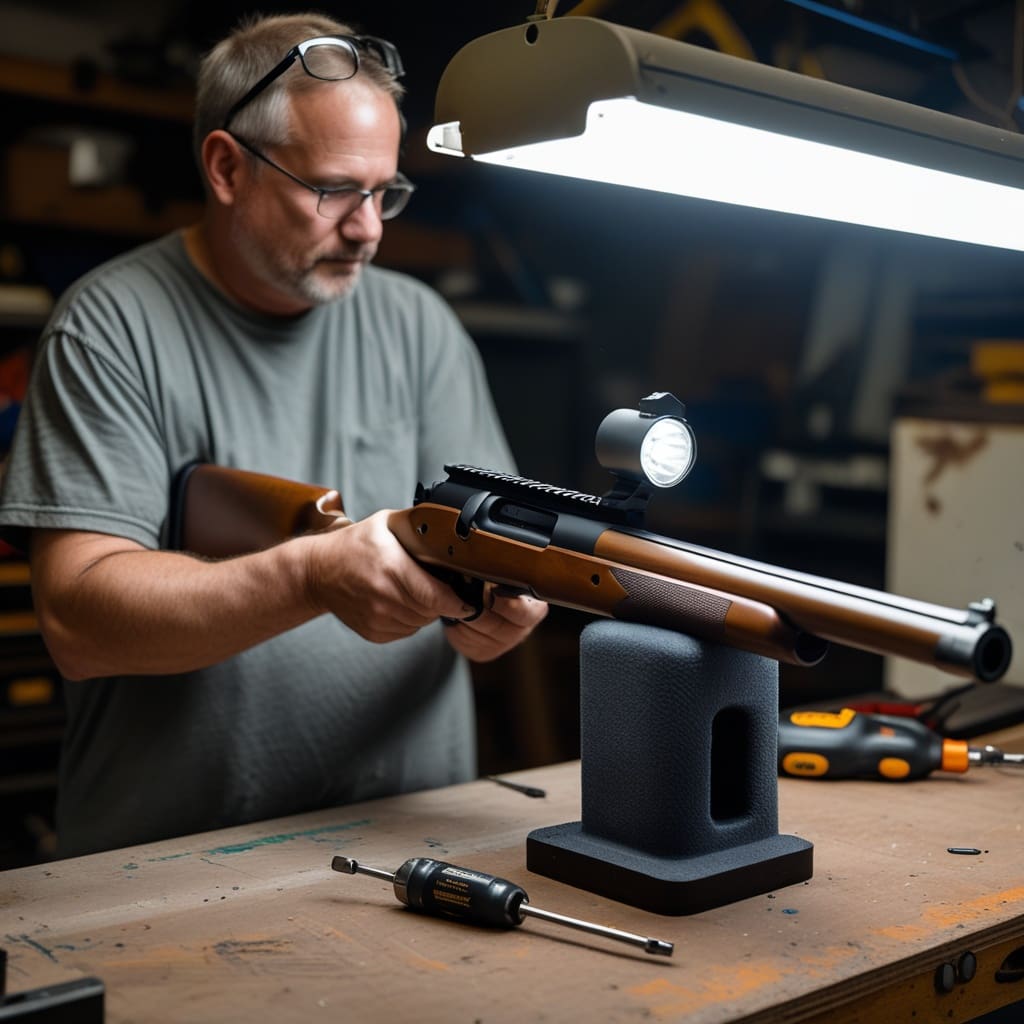
- Remove the factory forend. On most pump-action shotguns, this takes 5 to 10 minutes and requires removing the magazine cap and sliding the old forend forward off the magazine tube.
- Install the replacement forend or rail mount. Torque any mounting screws to the manufacturer’s specification, typically between 15 and 25 inch-pounds, using a torque driver if one is available.
- Attach the light body to the rail or built-in mount. Hand-tighten the mounting screw, then give it an additional quarter turn with a hex key to ensure it will not back out under recoil.
- Route the pressure switch wire. Run it along the forend using the adhesive tape or clips provided, positioning the pad where your support-hand fingers rest naturally without adjusting your grip.
- Test-fire for mount retention. Fire 20 to 30 rounds of your carry ammunition and recheck the mounting screw torque afterward. This step catches roughly 90 percent of mounting failures before they become a problem during actual use.
- Zero your point of impact if using a light with an integrated laser. Most lasers are boresighted at the factory to converge with the shotgun’s point of aim at 15 to 25 feet, which covers the typical engagement distance inside a home.
Common Mistakes to Avoid
Several recurring errors show up when people set up a shotgun light for the first time, and avoiding them saves both money and frustration.
- Using a rifle-rated mount on a shotgun. Many budget mounts are tested only against 5.56 or .223 recoil impulses, not the heavier, slower recoil pulse of a 12-gauge shell, which can loosen the mount within a single range session.
- Choosing output over runtime without checking both. A 1,500-lumen light that dies in 20 minutes is less useful than a 900-lumen light that runs for 2 hours, particularly if the light stays mounted and unused for long stretches between checks.
- Skipping the pressure switch. Relying solely on a tail cap switch means breaking your grip to activate the light, which costs precious time during an actual threat response.
- Forgetting to test-fire after installation. A mount that feels solid on the bench can still loosen after 20 to 30 rounds of buckshot, so verification matters more than it seems.
- Neglecting battery maintenance. A light staged near the bed for months without a battery check can fail exactly when needed. Set a reminder to test the light and inspect the battery every 90 days.
A weapon light is only as reliable as the last time you tested it. Staging a shotgun with a dead battery provides no more benefit than staging one with no light at all.
Take Action on Your Home Defense Setup
Selecting the right light is only half the equation; proper installation, regular testing, and realistic practice under low-light conditions complete the picture. If you already own a defensive shotgun, check your forend compatibility today and compare it against the models listed above before making a purchase. Consider scheduling a low-light training session at a local range within the next 30 to 60 days to confirm your light, mount, and pressure switch all function together the way you expect them to under recoil and stress.
Conclusion
The best shotgun light for home defense combines at least 600 lumens of output, a recoil-rated mount specific to your shotgun platform, and a pressure switch that keeps your firing grip intact. Dedicated forend lights like the Streamlight TL-Racker or Surefire DSF series remove mounting guesswork entirely, while modular options like the Modlite PLHv2 with a Mesa Tactical mount offer flexibility for shooters who want to customize output and battery type. Budget realistically between $150 and $400 for a complete, tested setup, and never skip the step of test-firing after installation to confirm the mount holds under actual recoil.
Frequently Asked Questions
How many lumens do I need for a home defense shotgun light?
At least 600 lumens, with 1,000 to 1,300 lumens being a more comfortable margin for larger rooms. Lower output can struggle to overcome ambient light from windows or hallway fixtures, making target identification slower and less certain in an actual encounter.
Can I use a regular flashlight instead of a weapon-mounted light?
A handheld flashlight works in a pinch, but it forces you to choose between illuminating a threat and maintaining a stable firing grip. Weapon-mounted lights let you keep both hands on the shotgun while still directing light exactly where your muzzle points, which most firearms trainers consider a meaningful safety advantage.
Do I need a laser sight combined with my shotgun light?
A laser is optional but not required for effective shotgun use at typical home defense distances of 5 to 15 feet. Shotgun patterns spread enough at close range that precise laser aiming matters less than it does with a handgun or rifle, though some shooters still prefer the added reference point.
How often should I test my shotgun light’s battery?
Check it every 90 days, and replace batteries proactively rather than waiting for a failure indicator. A light staged for home defense may sit unused for months, so a scheduled check prevents the light from being dead exactly when it is needed.
Will a shotgun light void my firearm’s warranty?
Installing an aftermarket forend or rail mount typically does not void a shotgun’s warranty, but drilling or permanently modifying the receiver could. Most reputable shotgun lights and mounts are designed as bolt-on or slide-on accessories that require no permanent modification, so check the manufacturer’s installation instructions before proceeding.