The best home defense shotgun is a 12-gauge or 20-gauge pump-action or semi-automatic with an 18 to 20-inch barrel and at least 5 rounds of capacity. A 12-gauge loaded with buckshot delivers more stopping power per shot, but a 20-gauge cuts recoil by nearly a third, which matters if you're smaller in build or new to shotguns. Prices for a dependable defensive shotgun run from around $400 for a base Mossberg 500 up to $2,200 or more for a Benelli M4. Picking the right one means weighing action type, gauge, and stock fit against your strength, your home's layout, and what you're willing to spend.
A shotgun remains one of the most recommended firearms for home defense because a single shell can incapacitate a threat at close range without the same over-penetration risk that some rifle rounds carry through interior walls. That said, not every shotgun on a dealer’s shelf is built for this job. Hunting guns, competition guns, and true tactical or defensive models differ in barrel length, sight setup, and capacity in ways that matter a great deal when seconds count.
Key Takeaways
- A 12-gauge pump-action shotgun with an 18 to 20-inch barrel is the most common and most tested choice for home defense, with the Mossberg 590A1 and Remington 870 among the most widely issued models to law enforcement.
- Semi-automatic options like the Beretta 1301 Tactical and Benelli M4 cycle faster and recoil less, but cost $400 to $1,000 more than comparable pump guns.
- Budget realistically: a functional entry-level defensive shotgun costs $350 to $500, a mid-tier model runs $600 to $900, and a premium semi-auto can reach $1,900 to $2,400.
- Barrel length between 18 and 20 inches, plus a stock adjusted to your reach, matters more for real-world performance than any add-on accessory.
- Ammunition choice, most often 00 buckshot, should be pattern-tested in your own gun at 7 to 15 feet before you rely on it.
Why a Shotgun Makes Sense for Home Defense
A 12-gauge shotgun loaded with 00 buckshot delivers eight to nine .33-caliber pellets in a single shot, producing far more immediate stopping power at typical indoor distances of 7 to 21 feet than a single handgun round. Because most home defense encounters happen inside 15 feet, the spread pattern of buckshot forgives some of the aiming error that adrenaline and low light introduce. Shotguns also carry a psychological deterrent effect. The distinct sound of a pump-action shotgun racking a shell is widely recognized, and in many documented self-defense cases, the sound alone has caused an intruder to flee before a shot was fired.
Shotguns are not without drawbacks. Recoil from full-power 12-gauge loads can reach 30 to 40 foot-pounds of energy, which is significant for smaller-framed shooters or those with limited upper body strength. Ammunition capacity on most factory pump guns tops out at 5 to 8 rounds, well below the 10 to 17-round capacity typical of a defensive handgun or rifle magazine. Weigh these tradeoffs against your own physical ability and the layout of your home before committing to a gauge and action type.
Choosing an Action Type: Pump-Action vs. Semi-Automatic
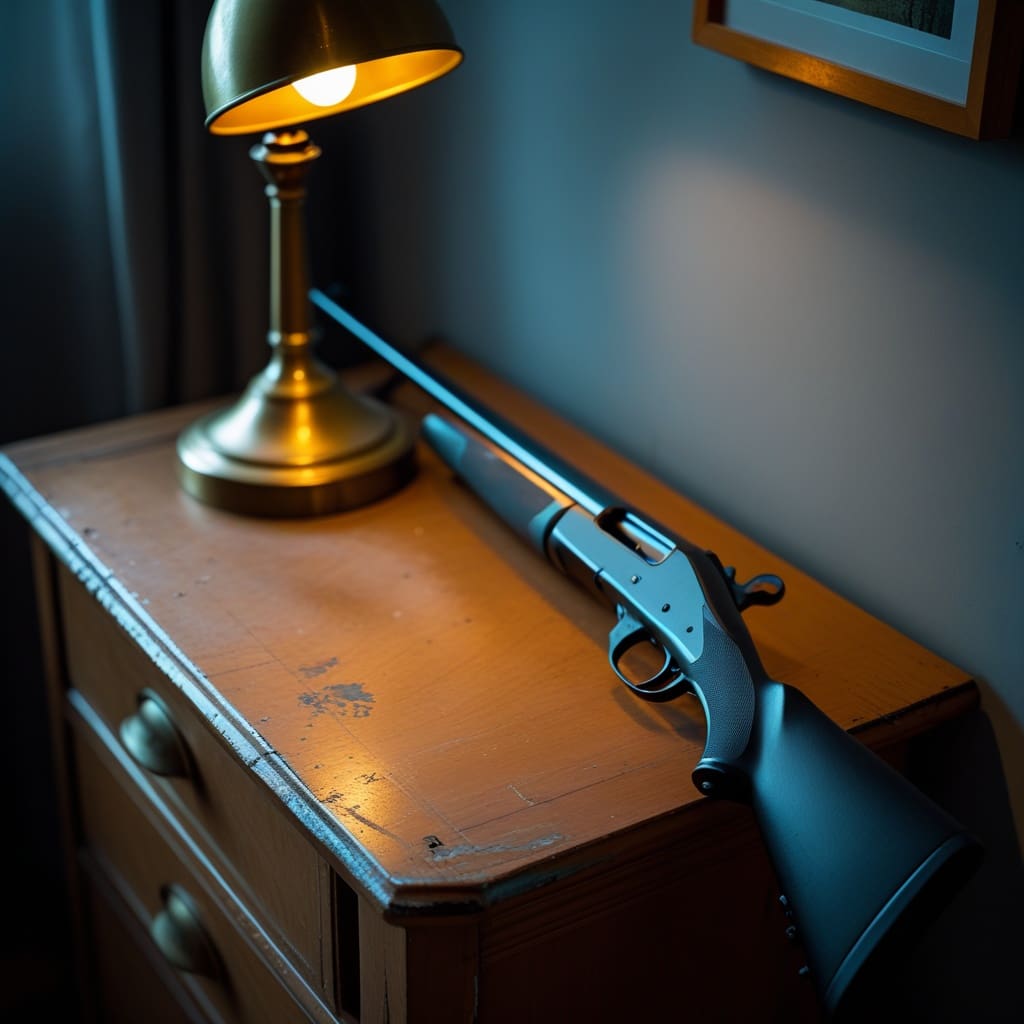
Pump-action shotguns cycle each shot manually by racking the forend, while semi-automatic shotguns cycle automatically using gas or inertia systems, firing again with each trigger pull. Pump guns are simpler, more affordable, and mechanically harder to fail because they rely on your own arm strength rather than gas pressure or recoil energy to cycle. Semi-autos reduce felt recoil by 20 to 30 percent compared to a pump gun firing the same load, and they allow faster follow-up shots since there is no manual racking step between rounds.
The Mossberg 590A1 remains the benchmark pump-action choice, built to U.S. military specification MIL-S-3443G with a heavier barrel and receiver than the standard 590, and it typically retails between $700 and $850. The Remington 870 Tactical, long a staple among first-time buyers, sits closer to $450 to $600 and benefits from an enormous aftermarket parts ecosystem. On the semi-automatic side, the Beretta 1301 Tactical uses Beretta’s Blink gas operating system and has become popular for its fast cycling and low recoil, priced around $1,100 to $1,300, while the Benelli M4, the inertia-driven system adopted by the U.S. Marine Corps as the M1014, commands $2,000 to $2,300 for its combat-proven reliability.
Comparing Popular Home Defense Shotgun Models
Six models come up again and again when people ask about home defense shotguns, with pricing reflecting typical 2026 street prices.
- Mossberg 590A1 (pump): 20-inch barrel, 8 rounds, 3-inch chamber, 7.25 pounds, $700 to $850. Mil-spec build without semi-auto pricing.
- Remington 870 Tactical (pump): 18.5-inch barrel, 6 to 7 rounds, $450 to $600. Great beginner choice with tons of aftermarket parts.
- Beretta A300 Ultima Patrol (semi-auto): 18.5-inch barrel, 7 rounds, $900 to $1,050. Gas-operated reliability cheaper than the 1301.
- Beretta 1301 Tactical (semi-auto): 18.5-inch barrel, 7 rounds, $1,100 to $1,300. Fast cycling proven in 3-gun competition.
- Benelli M4 (semi-auto): 18.5-inch barrel, 5 to 7 rounds, $2,000 to $2,300. Military-grade inertia system with a proven track record.
- Mossberg 940 Tactical (semi-auto): 18.5-inch barrel, 7 rounds, $750 to $900. Self-cleaning gas system that runs longer between cleanings.
Price doesn’t determine suitability. A $500 Remington 870 that fits you and that you’ve trained with beats a $2,200 Benelli M4 sitting untouched in a closet. Familiarity with your firearm matters more than its price tag.
Gauge, Barrel Length, and Capacity: The Specs That Matter Most
Gauge is the first decision. A 12-gauge gives you the widest ammo choice and most stopping power per shot, while a 20-gauge cuts felt recoil by roughly 15 to 20 percent, making it a solid fit for smaller-framed or recoil-sensitive shooters. Loaded with 3-inch magnum buckshot, a 20-gauge still performs well at typical indoor ranges. Pick based on fit, not just power.
Barrel length between 18 and 20 inches gives you enough maneuverability for hallways and furniture without spreading the pattern too wide to control. Anything under 18 inches counts as a short-barreled shotgun under federal law, requiring a $200 tax stamp and ATF approval that can take months. Stick with a factory-legal barrel of 18.5 inches or longer unless you’ve already gone through that process.
Magazine capacity runs from 4+1 on compact models to 8+1 on extended-tube variants like the 590A1. Most home defense situations only need 5 to 7 rounds, since actual defensive shootings usually involve two or three shots fired. Extended tubes add weight and length up front, which can make the gun clumsier to swing through doorways in a smaller home.
Fit, Ergonomics, and Recoil Management
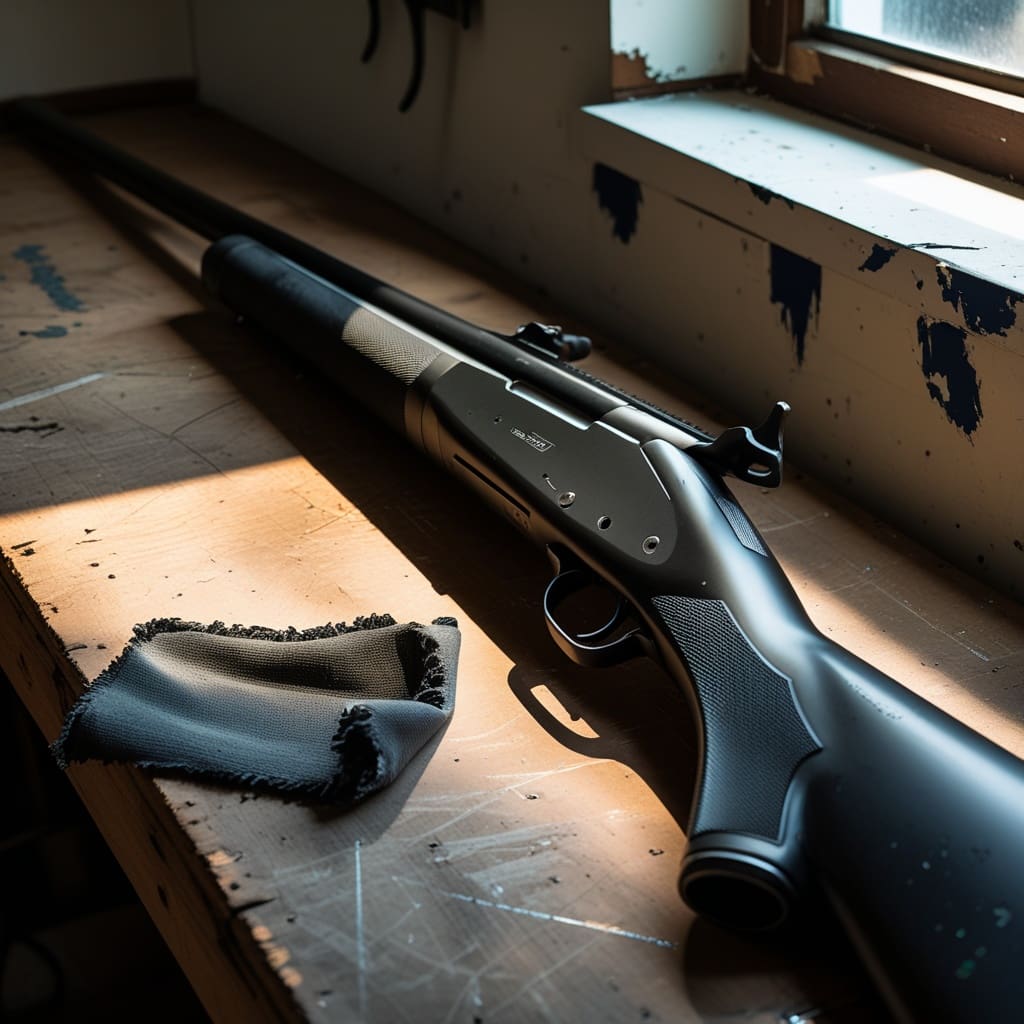
A shotgun that does not fit your body will slow your follow-up shots and increase felt recoil regardless of how expensive it is. Length of pull, the distance from the trigger to the butt of the stock, typically runs 13 to 14.5 inches on factory stocks, but many manufacturers now offer adjustable or interchangeable stock spacers that shrink that distance to 12 inches or less for smaller shooters. A stock that is too long forces you to reach awkwardly and slows your ability to mount the gun to your shoulder in a hallway or bedroom doorway.
Recoil pads add measurable comfort during practice sessions. A quality aftermarket recoil pad, priced $25 to $60, can reduce felt recoil by an estimated 20 to 30 percent compared to a hard factory buttplate. Pistol grip stocks, popular on tactical-styled shotguns, look aggressive but often reduce control during rapid fire compared to a traditional stock with a cheek weld, since they place more recoil energy directly into the wrist rather than the shoulder. For most first-time buyers, a standard or adjustable stock outperforms a pistol-grip-only configuration for controlled, repeatable shots.
A shotgun you can shoulder quickly and control through two or three fast shots in low light will always outperform a heavier, more expensive gun you have never practiced with under stress.
Sights, Lights, and Accessories Worth the Investment
Factory bead sights work adequately at close range but slow target acquisition once distance exceeds 10 to 15 feet. Ghost ring sights, standard on the Mossberg 590A1, cost $40 to $90 as an upgrade on other models and provide a faster, more precise sight picture in low light than a simple bead. Red dot optics, increasingly common on tactical shotguns, range from $150 for an entry-level model to $500 or more for a premium enclosed-emitter unit, and they speed up target acquisition significantly for shooters with astigmatism or aging eyesight.
A weapon-mounted light is arguably the single most important accessory for a home defense shotgun, since most home invasions occur between 10 p.m. and 4 a.m. according to Department of Justice victimization survey data. A quality light producing 500 to 1,000 lumens, priced $100 to $250 depending on brand, lets you positively identify a threat before deciding to fire, which is a legal and ethical necessity, not an optional convenience. Slings, sidesaddle shell carriers, and extended magazine tubes are useful secondary additions, generally priced $20 to $150 each, but they should come after the light and sights, not before.
Step-by-Step: How to Choose Your Home Defense Shotgun
- Step 1: Set your budget. Decide on a realistic total, including accessories, somewhere between $600 and $1,500 for a complete, ready-to-use setup.
- Step 2: Pick your gauge. Choose 12-gauge for maximum power or 20-gauge if you or another household member weighs under 150 pounds or has a shoulder or back injury.
- Step 3: Choose action type. Select pump-action if you want mechanical simplicity near $500, or semi-automatic if you want reduced recoil and are willing to spend $900 to $2,300.
- Step 4: Test the fit. Shoulder the gun at a licensed dealer and confirm the length of pull matches your arm length within a half inch of comfortable reach.
- Step 5: Add a light. Budget $100 to $250 for a weapon-mounted light rated at least 500 lumens before spending on any other accessory.
- Step 6: Pattern your ammunition. Fire 3 to 5 different 00 buckshot loads at 7, 10, and 15 feet to see which produces the tightest, most predictable spread from your specific barrel.
- Step 7: Train regularly. Plan for at least 4 range sessions per year, firing 25 to 50 rounds each time, to maintain muscle memory for racking, mounting, and reloading under time pressure.
Legal Considerations Before You Buy
Federal law under 18 U.S.C. § 922 requires a licensed dealer to run a National Instant Criminal Background Check System (NICS) check before transferring any shotgun, a process that typically clears within 5 to 15 minutes but can take up to 3 business days if flagged for further review. State laws vary considerably beyond that federal floor. States such as California, New York, and New Jersey impose additional waiting periods ranging from 10 days to 2 weeks, along with restrictions on magazine capacity that can limit tube-fed shotguns to 5 or 6 rounds regardless of the factory configuration.
Barrel length restrictions matter as well. Any shotgun with a barrel under 18 inches, or an overall length under 26 inches, falls under National Firearms Act regulation, requiring registration with the ATF and a $200 tax stamp. Processing times for NFA items through the ATF eForms system have improved substantially in recent years, with many approvals now completed in 30 to 90 days rather than the 6 to 12 months common a decade ago, but stock factory-length shotguns avoid this process entirely and remain the simpler, faster path for most buyers.
Call to Action
Visit a licensed local dealer and physically shoulder at least three different shotgun models before you decide, since fit and feel cannot be judged from a spec sheet or an online review alone. Bring a notebook, record the length of pull, weight, and price of each option you try, and schedule a range session within your first two weeks of ownership to pattern your ammunition and confirm reliable function.
Conclusion
Selecting a home defense shotgun comes down to matching gauge, action type, and fit to your own physical ability and household layout, then backing that choice with a quality light, appropriate sights, and consistent practice. Whether you land on a $500 Remington 870 Tactical or a $2,200 Benelli M4, the gun that serves you best is the one you have trained with enough to operate reliably under stress. Budget for accessories and ammunition alongside the firearm itself, and treat the initial purchase as the beginning of an ongoing practice commitment rather than a single, one-time decision.
Frequently Asked Questions
What gauge shotgun is best for home defense?
A 12-gauge shotgun offers the most stopping power, while a 20-gauge suits smaller or recoil-sensitive shooters. Both gauges are effective at typical indoor distances of 7 to 21 feet when loaded with appropriate buckshot, so the right choice depends more on who will be handling the gun than on raw ballistic performance.
How many rounds should a home defense shotgun hold?
Five to seven rounds is sufficient for nearly all home defense scenarios. Most documented defensive shootings involve two to three shots fired, so extended magazine tubes beyond 8 rounds add unnecessary weight and length without a corresponding practical benefit for most households.
Is a pump-action or semi-automatic shotgun better for beginners?
A pump-action shotgun is generally the better starting point due to its mechanical simplicity and lower price, typically $450 to $850. Semi-automatic models cycle faster and reduce felt recoil by 20 to 30 percent, but they cost $400 to $1,500 more and require more attention to cleaning and ammunition quality to run reliably.
What barrel length is legal without special ATF paperwork?
Any barrel of 18 inches or longer, with an overall firearm length of at least 26 inches, avoids National Firearms Act registration. Shorter barrels require a $200 tax stamp and ATF Form 1 or Form 4 approval, a process now often completed in 30 to 90 days through the eForms system.
How much should I budget for a complete home defense shotgun setup?
Plan for $600 to $1,500 total, covering the shotgun, a weapon-mounted light, sights, and ammunition. A base pump-action model runs $450 to $850, a quality light adds $100 to $250, and 50 to 100 rounds of buckshot for patterning and practice typically costs $40 to $80.