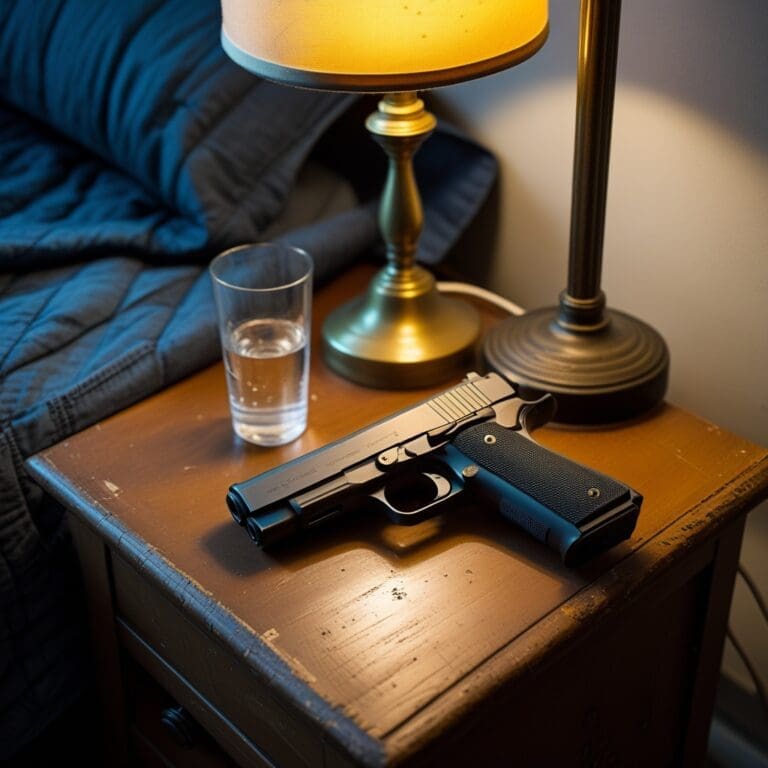
A 12-gauge shotgun generally delivers more stopping power per shot, while a handgun offers faster follow-up shots, easier maneuverability in tight hallways, and a much shorter learning curve for most households. Neither weapon is universally “better.” The right choice depends on your home’s layout, your physical ability to handle recoil, how many people live in the house, and how much time you can realistically commit to training. Roughly 60 percent of defensive gun uses in the home involve a handgun, according to firearm researcher surveys, largely because handguns are easier to store, retrieve, and use one-handed while calling 911 or shielding a family member.
This decision matters more than most first-time gun owners realize. A weapon that is difficult to control under stress, or too large to move through a hallway or around a doorframe, can slow your reaction time when seconds count. Below, you will find a direct comparison of both options across the factors that actually affect a real defensive scenario, not just what looks impressive at the range.
Key Takeaways
- A 12-gauge shotgun loaded with buckshot delivers significantly more energy per shot than a 9mm handgun, but it is heavier, longer, and harder to maneuver in tight interior spaces.
- Handguns dominate real-world defensive use because they are faster to draw, easier to hold with one hand, and simpler to store in a quick-access safe near a bed.
- Over-penetration through interior drywall is a real risk with both weapons; shot placement and ammunition choice matter more than the platform itself.
- A basic home defense handgun setup runs $400 to $900, while a defensive shotgun setup typically costs $350 to $800, not counting ammunition and training.
- Recoil-sensitive shooters, older adults, and smaller-framed individuals often perform better with a handgun or a reduced-recoil 20-gauge shotgun than a full-power 12-gauge.
How Handguns and Shotguns Actually Perform in a Home Defense Scenario
Stopping power is not just about the size of the bullet or the shell. It is about how quickly a defensive tool can be brought to bear, aimed, and fired accurately under extreme stress. Studies on officer-involved shootings and civilian defensive gun uses consistently show that most home defense encounters happen at distances of 3 to 10 feet, often in low light, and last only a few seconds.
A 12-gauge shotgun firing 00 buckshot sends eight to nine .33-caliber pellets downrange in a single trigger pull, each carrying roughly 350 foot-pounds of energy on its own, for a combined energy output far exceeding almost any handgun round. That is why many firearms instructors describe the shotgun as the platform with the highest one-shot-stop probability of any common home defense weapon. The tradeoff is length. A typical pump shotgun measures 38 to 41 inches overall, which becomes a real disadvantage when moving around a corner, opening a closet door, or fighting for control of the weapon at close range.
A handgun chambered in 9mm.40 S&W, or .45 ACP produces far less energy per shot, typically 350 to 500 foot-pounds depending on load, but it allows for one-handed operation, faster target transitions, and a compact profile that moves easily through doorways and stairwells. The tradeoff for that speed and convenience is a lower margin for error on shot placement.
Shotgun vs Handgun: Side-by-Side Comparison
- Stopping power per trigger pull: Shotgun with buckshot delivers significantly more total energy than any single handgun round.
- Maneuverability in tight spaces: Handgun wins decisively; a 38-inch shotgun is difficult to bring around corners or through narrow hallways under 36 inches wide.
- Recoil management: Handgun is easier for most shooters; a 12-gauge defensive load can generate 20 to 30 foot-pounds of felt recoil, compared to roughly 5 to 8 foot-pounds for a 9mm handgun.
- Capacity before reload: Standard pump shotguns hold 4 to 8 shells; standard duty handguns hold 10 to 17 rounds depending on magazine and caliber.
- Speed to first shot: Handgun is generally faster from a nightstand or holster; a shotgun stored in a rack or safe takes longer to retrieve and chamber.
- One-handed operation: Only the handgun realistically allows you to hold a phone, flashlight, or shield a child with your other arm while still being able to fire.
- Training curve: Handgun proficiency under stress typically requires more repetition to master reliably, since a shotgun’s wider shot pattern forgives minor aiming errors at close range.
- Noise and hearing risk: Both are extremely loud indoors, often exceeding 150 decibels, but a shotgun blast in an enclosed hallway can cause more severe, immediate hearing damage due to its lower-pitched, higher-energy report.
Over-Penetration: The Risk Both Weapons Share
Interior walls made of half-inch drywall and wood studs stop almost nothing. Research from ammunition manufacturers and ballistic gel testing labs shows that most standard handgun rounds, including 9mm ball ammunition, will pass through multiple layers of drywall and still retain enough energy to cause serious injury on the other side. This is one of the most misunderstood aspects of the shotgun vs handgun for home defense debate, because many buyers assume a shotgun is automatically safer for bystanders in adjoining rooms. It is not, unless the ammunition is chosen carefully.
Buckshot pellets, particularly 00 buck, penetrate drywall almost as effectively as many handgun rounds, just distributed across multiple projectiles instead of one. Birdshot, by contrast, loses velocity quickly and is far less likely to penetrate more than one or two interior walls, which is why some instructors recommend low-recoil birdshot or reduced-power buckshot loads specifically for home defense in multi-room homes or apartments with shared walls.
For handguns, hollow-point defensive ammunition, such as jacketed hollow points loaded to expand on impact with soft tissue, is designed to reduce over-penetration compared to full metal jacket rounds, though it does not eliminate the risk entirely. Regardless of platform, you are legally and practically responsible for every round that leaves your firearm, including any that travels beyond your intended target.
Cost Breakdown: What You Will Actually Spend
Budget matters as much as ballistics when choosing between these two options. Here is a realistic breakdown of what a functional home defense setup costs in 2026, based on current retail pricing for entry-level and mid-range firearms.
- Entry-level pump shotgun (12-gauge): $250 to $450 for models such as a basic Mossberg 500 or Remington 870 variant.
- Defensive buckshot ammunition: $10 to $18 per box of 25 shells.
- Home defense handgun (9mm): $350 to $650 for a reliable striker-fired pistol from a major manufacturer.
- Defensive hollow-point ammunition: $18 to $30 per box of 50 rounds.
- Quick-access biometric or push-button safe: $80 to $200, recommended for either weapon type.
- Basic defensive training course: $75 to $250 for a single-day class through a local range or an NRA-certified instructor.
- Optional weapon light or laser attachment: $60 to $180, strongly recommended for either platform given that most home invasions occur at night or in low light.
All told, a complete handgun setup with training and a safe typically lands between $600 and $1,100. A complete shotgun setup lands between $500 and $950. Neither figure includes concealed carry permit fees, which vary by state from $0 in permitless carry states to roughly $100 in states that still require a license.
Which Option Fits Your Household Best
Physical ability plays a bigger role in this decision than most first-time buyers expect. A full-power 12-gauge defensive load can be difficult for a smaller-framed adult, an older person, or someone recovering from a shoulder injury to manage under repeated fire. Reduced-recoil buckshot or a 20-gauge shotgun narrows that gap considerably, cutting felt recoil by roughly 30 to 40 percent compared to full-power 12-gauge loads, without a major loss in effective stopping power at typical indoor distances.
Home layout matters just as much. A single-story ranch home with wide, open hallways favors a shotgun’s strengths, since there is room to bring the weapon to bear without banging the muzzle against a doorframe. A multi-story home with narrow stairwells, an apartment, or a townhouse with close neighbors on the other side of shared walls generally favors a handgun paired with carefully selected low-penetration ammunition.
Households with more than one adult sometimes choose to keep both. One partner may prefer the shotgun’s simplicity and low skill floor, while the other trains more extensively with a handgun for its speed and one-handed control. This is common enough that many firearms instructors recommend it as a practical middle ground rather than a compromise.
The most dangerous home defense weapon is the one you have not trained with. A $900 handgun you have fired twice is far less useful than a $300 shotgun you have practiced with monthly.
Legal Considerations You Should Not Ignore
Self-defense law depends on your state, and your weapon choice doesn’t change the legal standard: most states require a “reasonable belief of imminent harm.” Many, including Florida, presume that fear is reasonable when someone forces entry into an occupied home. Over 30 states have some form of castle doctrine, but the rules on duty to retreat vary, so check your state’s actual statute.
Ammunition choice matters too. If a round over-penetrates and hits someone unintended, prosecutors and civil attorneys may question that choice. Use defensive-grade ammo built to limit over-penetration, and be ready to explain why you chose it.
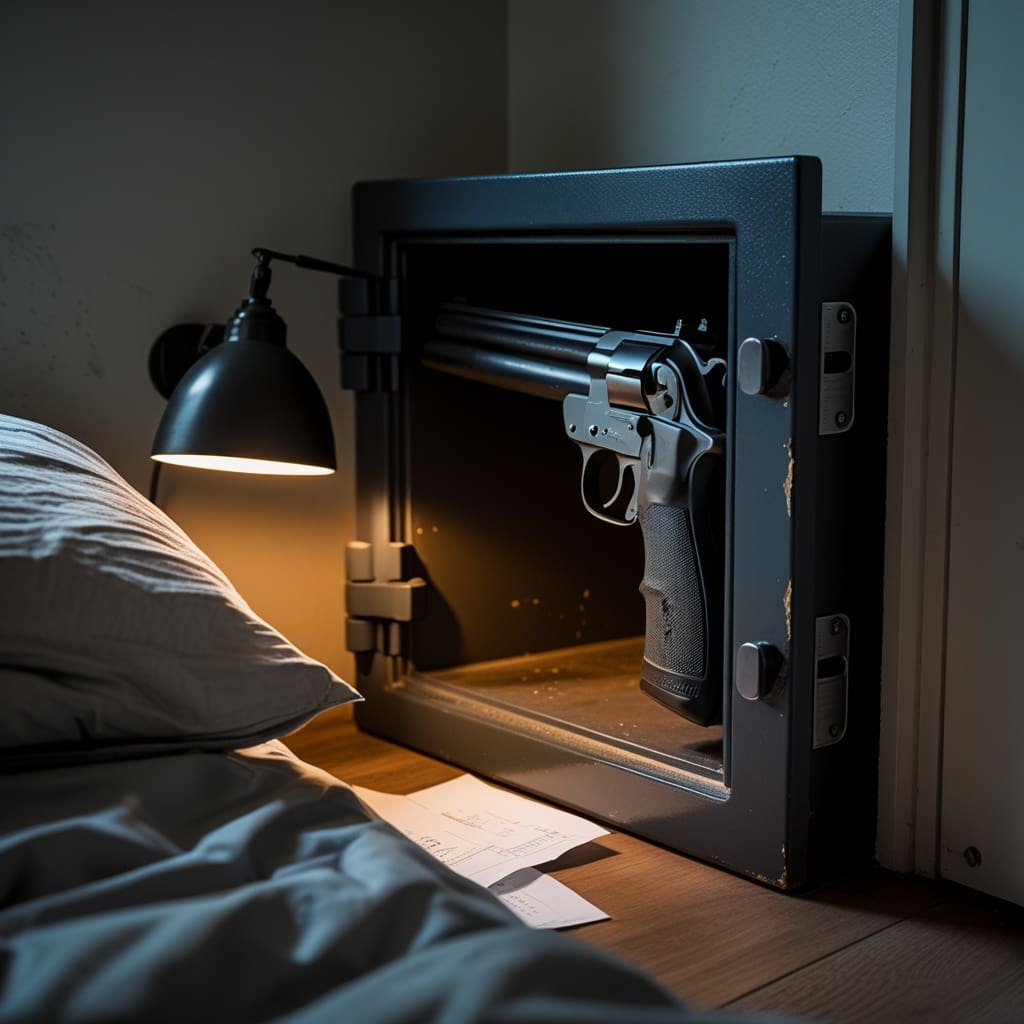
Storage laws add one more layer. States like California and Massachusetts require guns to be locked or disabled when not in your control, especially with kids in the house. A quick-access safe meets that requirement while keeping your gun ready when you need it fast.
Training Requirements: What Each Weapon Actually Demands
A shotgun forgives more aiming error at close range because a buckshot pattern spreads slightly with distance, typically opening to about 1 inch of spread per yard of travel. At 7 feet, that means a fairly tight pattern, but the margin for error is still wider than a single handgun bullet. New shooters often reach basic proficiency with a shotgun after two or three range sessions focused on mounting the weapon, working the pump action under stress, and controlling recoil.
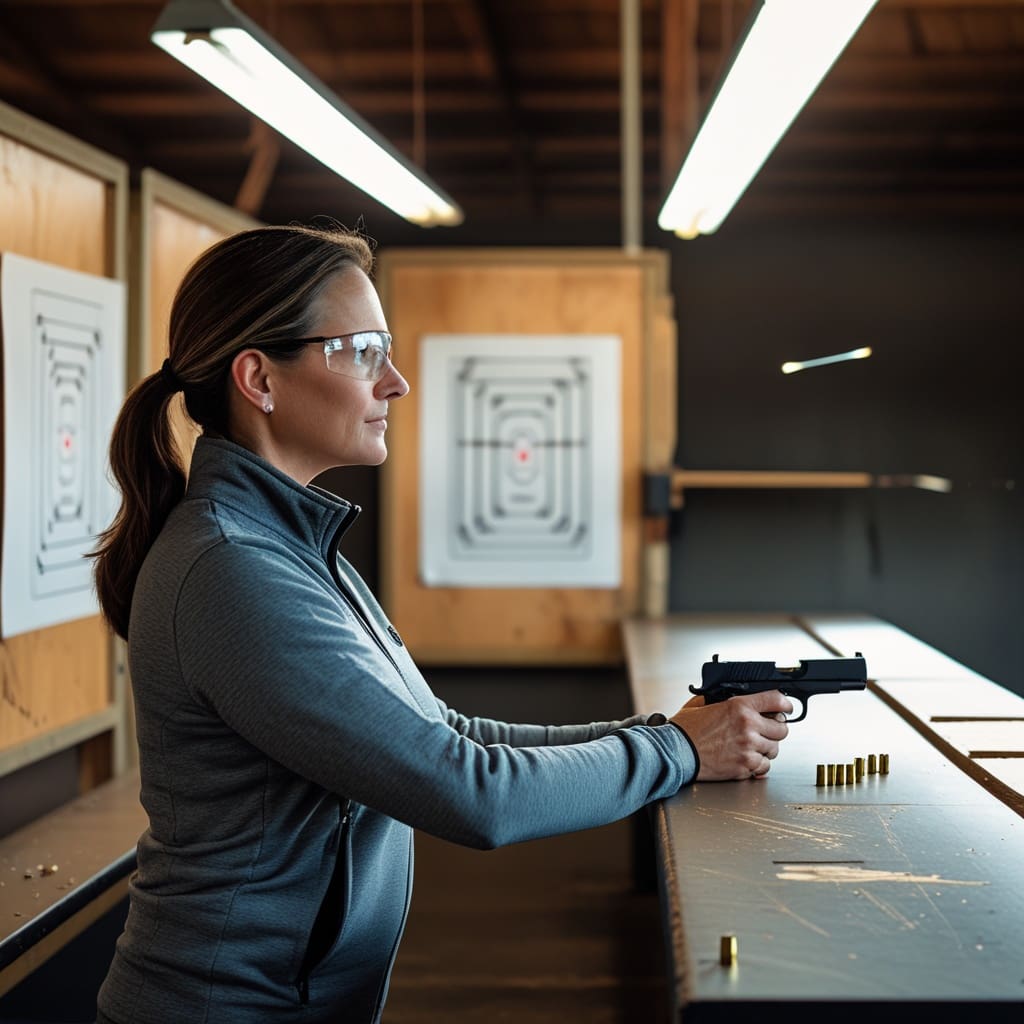
Handgun proficiency takes longer to build reliably. Because there is no forgiving shot pattern, grip, trigger control, and sight alignment all have to be consistent even under adrenaline. Most certified instructors recommend a minimum of one structured class plus monthly practice sessions of 50 to 100 rounds for the first six months to build the kind of muscle memory that holds up during an actual threat, when heart rate and fine motor control are both compromised by stress.
Dry-fire practice, using an unloaded weapon to rehearse draw, grip, and trigger press without live ammunition, is one of the most cost-effective ways to build handgun proficiency and costs nothing beyond the initial purchase. Ten minutes of dry-fire practice three times a week produces measurable improvement in draw speed and trigger control within about four to six weeks, according to firearms training research cited by multiple certified instructor programs.
What to Do Next
Visit a local range that rents both a pump shotgun and a defensive handgun, and fire at least 25 rounds through each before making a final decision. Pay attention to how each weapon feels moving through a simulated hallway or around a barrier, not just how it feels standing flat-footed at a firing line. Many ranges offer rental packages for $40 to $70 that include ammunition, which is far cheaper than buying a weapon you later decide does not fit your home or your physical ability to control it.
After that range session, book a one-day defensive shooting class through a certified instructor, and budget for a quick-access safe before you bring any firearm into a home with children or other household members. Making the purchase decision is only the first step; the training and storage decisions that follow it matter just as much for your family’s safety.
Conclusion
There is no single correct answer to shotgun vs handgun for home defense, because the right tool depends on your home’s floor plan, your physical capacity to manage recoil, and how much time you are willing to invest in training. A shotgun offers more raw stopping power and a shorter learning curve for close-range accuracy, while a handgun offers speed, maneuverability, and one-handed control that many households find more practical during an actual emergency. Whichever you choose, the weapon itself matters less than your familiarity with it, your ammunition selection, and your understanding of the legal standards in your state.
Frequently Asked Questions
Is a shotgun or handgun better for a small apartment?
A handgun is generally better suited for apartments and smaller homes. The shorter length makes it easier to maneuver through narrow hallways, and low-penetration hollow-point ammunition reduces the risk of a round traveling through shared walls into a neighboring unit.
Can a shotgun shoot through walls and hurt someone in another room?
Yes, standard buckshot loads can penetrate multiple layers of drywall. Birdshot or reduced-power buckshot loads lose velocity faster and are less likely to pass through several interior walls, making them a safer choice in homes with multiple rooms or close neighbors.
How many rounds should I expect to fire in a real home defense situation?
Most documented civilian defensive gun uses involve two to three shots fired, if any shots are fired at all. Many encounters end when the intruder becomes aware a homeowner is armed, without a shot being fired, which is why simply having a properly stored, accessible weapon matters as much as the specific platform chosen.
What gauge shotgun is best for someone with a smaller frame or recoil sensitivity?
A 20-gauge shotgun loaded with reduced-recoil buckshot is generally the best option for recoil-sensitive shooters. It cuts felt recoil substantially compared to a full-power 12-gauge while still delivering effective stopping power at typical indoor distances of 10 to 15 feet.
Do I need a special permit to keep a handgun or shotgun for home defense?
Permit requirements depend entirely on your state, but no special permit is generally required simply to keep a firearm inside your own home. Concealed carry permits, which vary in cost from $0 to roughly $100 depending on the state, are only required if you plan to carry the weapon outside your home, not to store or use it defensively at home.