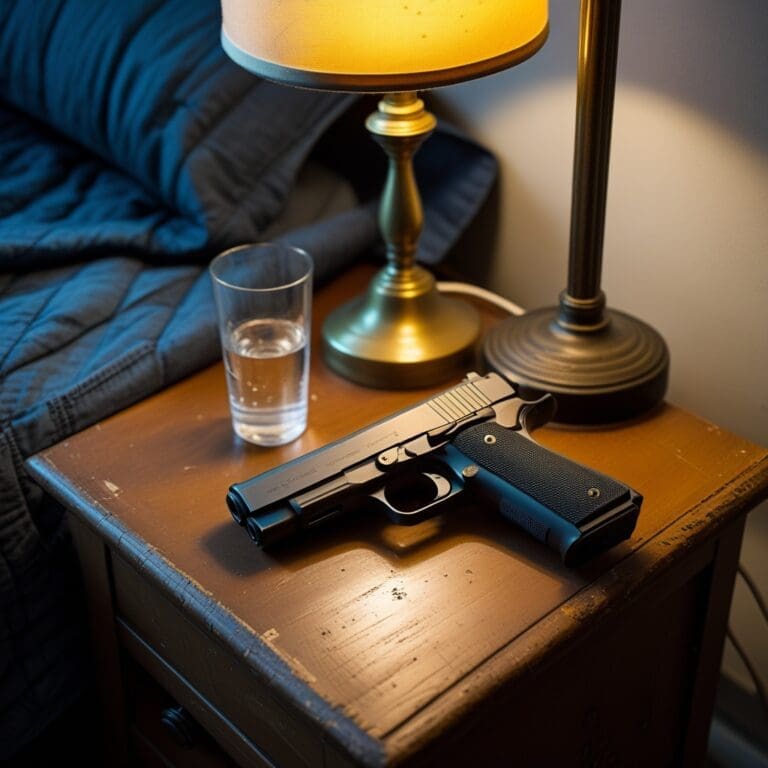
A single action revolver is a handgun that requires you to manually cock the hammer before each shot, with the trigger performing only one job: releasing that hammer to fire. This design traces back to the Colt Single Action Army of 1873, and it remains a favorite among collectors, hunters, and cowboy action shooters today. Unlike double action revolvers, which cock and fire with a single trigger pull, single action models demand a deliberate two-step motion for every round. That extra step is not a drawback to most owners; it is the entire point.
According to the Single Action Shooting Society (SASS), which sanctions cowboy action shooting matches across more than 400 affiliated clubs in the United States, single action revolvers remain the required sidearm for competitors in every category the organization sanctions. That alone tells you how relevant this century-and-a-half-old mechanism still is on ranges today.
Key Takeaways
- A single action revolver only fires after the hammer is manually cocked; the trigger cannot cock it for you.
- The Colt Single Action Army, introduced in 1873 and still produced today, set the pattern nearly every modern single action revolver still follows.
- Double action revolvers can be fired with one trigger pull, while single action models require cocking the hammer for every shot, a key difference for beginners deciding between the two.
- Entry-level single action revolvers typically run from $400 to $700, while premium and custom models can exceed $2,000.
- SASS-sanctioned cowboy action shooting requires two single action revolvers chambered in the same caliber, along with a rifle and shotgun.
- New shooters generally do best with a mid-weight .357 Magnum or .45 Colt single action in the 4.75-inch to 5.5-inch barrel range.
What Is a Single Action Revolver, Exactly?
A single action revolver is a repeating handgun where the trigger does only one job: dropping the hammer. Cocking the hammer and rotating the cylinder into place happens separately, when you pull the hammer back with your thumb. That’s why shooters describe the motion as “cock and pull” rather than a smooth double action stroke.
“Single action” describes this one-job trigger, and it shows up in semiautomatic pistols too, like the classic 1911 (often called SAO, or single action only). In both cases, the trigger just releases an already-cocked hammer or striker. The difference is a semiauto’s slide re-cocks the hammer for you after each shot, while a revolver shooter has to do it by hand every time.
Loading also works differently. Most single action revolvers, especially Colt-pattern guns, use a loading gate on the side of the frame and need the hammer set at “half cock” before the cylinder spins freely for loading. That’s a safety feature, not a flaw, though it does make loading slower than popping open a double action cylinder.
How Did Single Action Revolvers Develop?
The single action revolver as most people picture it today began with the Colt Single Action Army, adopted by the United States Army in 1873 and chambered originally in .45 Colt. Colt has manufactured the model, with some interruptions, for over 150 years, and the design has barely changed. Samuel Colt’s earlier percussion revolvers from the 1830s and 1840s established the basic single action mechanism decades before that, but the 1873 model, sometimes called the “Peacemaker,” became the template that nearly every single action revolver maker still references.
By the early 1900s, cartridge-firing single action revolvers had become standard sidearms for military units, law enforcement, and civilians across the American West. Double action revolvers gained ground through the late 1800s and 1900s because they offered faster follow-up shots, but single action models never disappeared. Instead, they found a lasting home in three areas: collecting, hunting, and competitive cowboy action shooting, a sport that took off in the 1980s and now draws thousands of competitors annually according to SASS’s own membership figures.
It is worth remembering that the “cowboy gun” aesthetic you see today is not nostalgia for its own sake; it reflects a mechanism that many shooters still find more accurate for slow, deliberate fire than a double action trigger with a longer, heavier pull.
Single Action vs Double Action Revolver: What Is the Real Difference?
The difference is what one trigger pull does. A single action revolver needs the hammer cocked by hand before every shot. A double action revolver cocks and releases the hammer in one pull, though you can still cock it manually.
- Trigger pull: Single action triggers are light and short, usually 3 to 5 pounds. Double action triggers are heavier and longer, often 8 to 14 pounds.
- Firing speed: Double action revolvers fire follow-up shots faster since there’s no separate cocking step. Single action shooters cock between every shot, which slows things down.
- Reloading: Single action revolvers usually load one round at a time through a loading gate. Double action revolvers use a swing-out cylinder, so a speedloader can fill or empty all chambers at once.
- Safety: Single action revolvers rely on the shooter’s thumb plus a half-cock or transfer bar. Double action models often add a hammer block or transfer bar, allowing safe carry with a loaded chamber.
- Typical use: Single action guns dominate cowboy action shooting, hunting, and collecting. Double action guns are more common for concealed carry and duty work, where fast follow-up shots matter.
Neither design beats the other; they fit different jobs. Double action suits someone who wants speed under stress, like personal defense. Single action suits someone who wants a crisp, light trigger and doesn’t mind cocking the hammer, like a hunter lining up one shot.
[IMAGE SUGGENTION_PLACEHOLDER]

What Are the Main Types of Single Action Revolvers?
Most single action revolvers sold today fall into a handful of recognizable categories, each built around a slightly different frame size, caliber range, or intended use.
- Traditional cowboy-style revolvers (based on the 1873 Colt pattern): typically chambered in .357 Magnum.45 Colt, or .44-40, with 4.75-inch to 7.5-inch barrels. These are the standard choice for cowboy action shooting and historical reenactment.
- Modern hunting revolvers: built on stronger frames to handle heavier calibers such as .44 Magnum.454 Casull, or .500 Wyoming Express, often with barrels of 7.5 inches or longer for better sight radius and velocity.
- Compact single action revolvers: shorter-barreled versions, frequently in .22 LR or .38 Special, marketed for trail carry, small game, or new shooters who want a lighter, easier-to-manage gun.
- Replica and reproduction models: faithful copies of 19th-century designs, often built by manufacturers in Italy and imported for the collector and cowboy action market, priced generally lower than American-made originals.
- Custom and engraved models: built by specialty gunsmiths with hand-fitted internals, upgraded actions, and decorative engraving, aimed at collectors and serious competitors willing to pay a premium.
How Much Does a Single Action Revolver Cost?
Prices for single action revolvers generally span four tiers, based on manufacturer, materials, and fit and finish.
- Budget replica models: $400 to $650, often from Italian manufacturers producing faithful reproductions of classic 19th-century patterns.
- Standard production models: $650 to $1,100, covering most mainstream American-made single action revolvers in common calibers like .357 Magnum and .45 Colt.
- Premium hunting revolvers: $1,000 to $1,800, built on reinforced frames for magnum-class cartridges like .44 Magnum or .454 Casull.
- Custom or collector-grade revolvers: $1,800 to $4,000 or more, featuring hand-tuned actions, engraving, or limited-production runs.
Ammunition cost is worth factoring in too. A box of 50 rounds of .357 Magnum typically runs $25 to $40, while .45 Colt tends to run slightly higher, often $30 to $50 per box, depending on bullet weight and manufacturer. Shooters who compete regularly in cowboy action matches often reload their own ammunition to cut per-round cost significantly, sometimes to under $0.20 per round compared to $0.50 to $0.80 for factory loads.
What Is the Best Single Action Revolver for Beginners?
A mid-weight single action revolver chambered in .357 Magnum, with a 4.75-inch or 5.5-inch barrel, is generally the most practical starting point for new shooters. That caliber lets you shoot milder .38 Special ammunition while learning the manual of arms, then step up to full-power .357 Magnum loads once you are comfortable with recoil and the cocking motion.
Beginners should also weigh grip size and weight. A revolver in the 38 to 40 ounce range tends to manage recoil more comfortably than a lightweight compact model, especially for someone still building trigger control and getting used to thumbing the hammer smoothly under time pressure. Fixed sights are standard on traditional patterns and adequate for most new shooters, though adjustable sights are available on some hunting-oriented models and can help with precision at longer ranges.
Before buying, it helps to handle a few different models side by side, since hammer spur shape, grip circumference, and trigger pull weight vary noticeably between manufacturers even within the same caliber and barrel length. You can browse the revolvers in stock to see single action and double action models side by side, which makes it easier to compare hammer geometry, grip feel, and overall balance before committing to one.
What Do You Need for Cowboy Action Shooting?
Cowboy action shooting requires two single action revolvers in matching caliber, a lever action rifle, and a shotgun, all reflecting firearms styles common before 1899, or reproductions of that era. SASS rulebooks specify that both revolvers must be true single action design, meaning no double action revolvers are permitted in standard categories.
Competitors shoot timed courses of fire that mix rifle, shotgun, and revolver targets, with scoring based on total time plus penalty seconds for missed targets or procedural errors, typically five seconds per miss. Matches are organized locally through hundreds of SASS-affiliated clubs, and many first-time competitors start by renting or borrowing gear before investing in a full period-appropriate outfit and firearm set.
Caliber choice matters for cowboy action shooting because rules generally require the revolver and rifle to share the same cartridge family for at least one shooting category, commonly .357 Magnum.38 Special, or .45 Colt. New competitors are often advised to choose .38 Special loads for the revolvers even if the gun is rated for .357 Magnum, since lighter recoil allows faster, more consistent target transitions during a timed stage.
Is a Single Action Revolver Safe to Carry Loaded?
Traditional single action revolvers built on the 1873 pattern are generally not considered safe to carry with a round under the hammer unless they include a modern safety feature, such as a transfer bar. Original 19th-century designs relied on a half-cock notch that could fail if the hammer was struck or dropped, which is why the historical practice was to carry these revolvers with only five of six chambers loaded, leaving the hammer resting on an empty chamber.
Most modern single action revolvers sold since the 1970s incorporate a transfer bar safety, which physically blocks the firing pin unless the trigger is fully pulled to the rear. This allows all six chambers to be loaded safely. Still, it is worth checking your specific model’s manual, since not every reproduction or older used revolver includes this feature, and treating an older design as if it had a transfer bar when it does not can be dangerous.
Ready to Choose Your First Single Action Revolver?
Selecting the right single action revolver comes down to matching the gun to your primary use, whether that is cowboy action competition, hunting, or simply owning a piece of firearms history. Visit a local shop, handle several models, and pay attention to trigger weight, hammer spur shape, and grip fit before making a final decision. A knowledgeable staff member can also walk you through caliber options and help confirm whether a specific model includes a modern transfer bar safety.
Frequently Asked Questions
What makes a revolver “single action” instead of “double action”?
A single action revolver requires you to manually cock the hammer before every shot, while a double action revolver can cock and fire with one trigger pull. The trigger on a single action gun performs only one function, releasing an already-cocked hammer, which is where the term comes from.
Can you shoot .38 Special ammunition in a .357 Magnum single action revolver?
Yes, any revolver chambered in .357 Magnum can safely fire .38 Special ammunition as well. This is because .357 Magnum cartridges were developed as a lengthened, higher-pressure version of the .38 Special case, and the shorter round chambers and fires normally in the longer cylinder.
How many rounds does a typical single action revolver hold?
Most single action revolvers hold six rounds, though some compact or specialty models hold five. The six-shot cylinder has been standard since the 1873 Colt Single Action Army and remains the most common configuration across nearly every modern manufacturer.
Do single action revolvers require special ammunition?
No, single action revolvers use standard, widely available factory ammunition in calibers like .357 Magnum.45 Colt, and .44 Magnum. No proprietary or hard-to-find cartridges are needed, which is part of why the platform has stayed popular for over 150 years.
Are single action revolvers legal to own in every state?
Single action revolvers are legal to purchase and own in all fifty states, subject to the same federal and state background check requirements as other handguns. Some states impose additional rules on magazine capacity or waiting periods that do not typically apply to revolvers, but buyers should always confirm current local regulations before purchasing.
Conclusion
Single action revolvers occupy a unique spot in the firearms world, tied to a design that has changed remarkably little since 1873 while still earning a place in modern competition, hunting fields, and collections. Understanding the mechanical difference between single action and double action systems, along with realistic pricing and caliber options, puts you in a strong position to choose a revolver that actually fits how you plan to use it. Whether that means stepping into your first cowboy action match or simply owning a well-made piece of American firearms heritage, the single action revolver remains as functional today as it was over a century ago.