A Glock 19 threaded barrel replaces the factory barrel with one machined at the muzzle end to accept a suppressor or other muzzle device. The threading typically follows the 1/2×28 TPI pattern used across most 9mm pistols, and the barrel extends roughly 0.5 to 0.6 inch beyond the slide to clear the frame. According to industry data compiled by the National Shooting Sports Foundation, suppressor ownership among civilian shooters has grown steadily for over a decade, and threaded pistol barrels are one of the most common upgrades purchased alongside that trend. Whether you actually need one depends on how you use your pistol and whether a suppressor is part of your current or future plans.
Key Takeaways
- A Glock 19 threaded barrel adds external threads (usually 1/2×28 TPI) so you can attach a suppressor or a muzzle device such as a compensator.
- Threaded barrels do not make a pistol legally “suppressor ready” on their own; you still need an ATF-approved suppressor and a $200 tax stamp under the National Firearms Act.
- Aftermarket threaded barrels for the Glock 19 typically cost between $110 and $300, depending on coating, fluting, and manufacturer.
- Common finishes include QPQ nitride, PVD in colors like FDE or bronze, and fluted designs that shave a small amount of weight from the barrel.
- Installation takes most owners under 15 minutes with basic tools, though a compatible guide rod and recoil spring assembly should be checked before you fire it.
What Is a Glock 19 Threaded Barrel?
A threaded barrel is a drop-in replacement for the factory Glock 19 barrel, cut with external threads at the muzzle so a suppressor, thread protector, or muzzle brake can screw directly onto it. The Glock 19’s stock barrel measures 4.02 inches, and threaded aftermarket versions generally run between 4.49 and 4.60 inches overall to allow the threaded section to protrude past the slide once installed. That extra length is what gives a suppressor, or any other muzzle device, enough surface to mount securely without interfering with slide travel.
Most Glock 19 threaded barrels are machined from 416R stainless steel, the same alloy Glock uses in many factory barrels, then finished with a coating for corrosion resistance and reduced friction. You will find these barrels sold for Gen 3 through Gen 5 frames, since the barrel itself is largely interchangeable across those generations as long as the chamber and lug dimensions match the factory specification.
What Does a Threaded Barrel Actually Do?
A threaded barrel gives you a mounting point for a muzzle device, which is its entire function. It does not change the pistol’s caliber, ammunition compatibility, or internal ballistics on its own. Once threaded, the barrel can accept:
- Suppressors, which reduce the sound signature of a shot by roughly 20 to 35 decibels depending on the model, per data published by the American Suppressor Association.
- Thread protectors, which simply cap the exposed threads when no suppressor is attached, preventing debris buildup or accidental damage.
- Compensators or muzzle brakes, which redirect gas to reduce muzzle rise during rapid firing.
Because the Glock 19 is already a common host for suppressed builds, threaded barrels for this model are widely stocked and priced competitively compared to threading options for less popular pistols. You can see threaded Glock 19 barrel options in stock to compare thread pitch, coating, and fluting side by side before deciding which fits your setup.
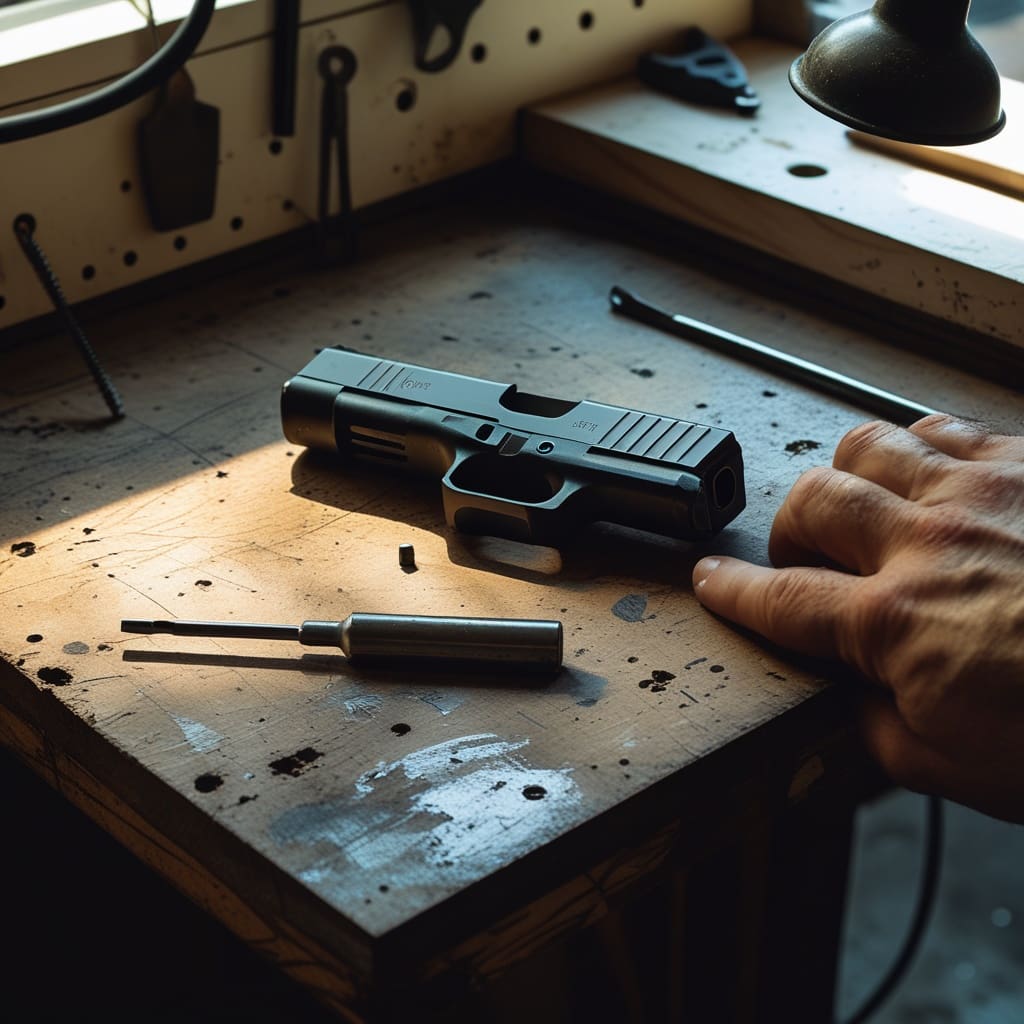
What Are the Benefits of a Threaded Barrel Upgrade?
The main benefit of a threaded barrel is suppressor compatibility, but several secondary advantages come with most aftermarket versions. Coated barrels resist corrosion better than the factory finish in humid or coastal environments. Fluted designs cut roughly 8 to 12 percent of barrel weight without sacrificing strength, which can slightly reduce felt recoil impulse. Many shooters also report tighter chamber tolerances on premium aftermarket barrels, which can improve accuracy by a small but measurable margin at 15 to 25 yards.
Beyond function, threaded barrels are one of the more visible ways to customize a Glock 19 without touching the frame or trigger group. A spiral-fluted barrel finished in PVD bronze or iridescent color looks distinct through the slide’s ejection port, something a growing number of Glock owners treat as a cosmetic upgrade in addition to a functional one.
How Much Does a Glock 19 Threaded Barrel Cost?
Expect to pay between $110 and $180 for a basic QPQ nitride-coated, non-fluted threaded barrel, and between $180 and $300 for premium versions with spiral fluting, PVD finishes, or custom colors like FDE, gray, or copper. Bare stainless barrels without additional coating sometimes sell for under $100, though most buyers choose a finished option for corrosion resistance. Budget an extra $30 to $50 if you also need a compatible thread protector or a suppressor-height sight set, since a taller front sight is often necessary to see over a suppressor’s body.
Is a Glock 19 Threaded Barrel Suppressor Ready?
A threaded barrel is a necessary component for running a suppressor, but it does not make your pistol legal to suppress by itself. Suppressors are regulated under the National Firearms Act of 1934 and classified by the ATF as Title II devices, meaning you must complete an ATF Form 4, pay a $200 tax stamp, and pass a background check before you can legally possess one. As of 2026, the ATF’s eForms system has cut average approval times to roughly 1 to 4 months for individual applicants, a significant drop from the 8 to 12 month waits common before the electronic system was rolled out, according to processing data the ATF’s NFA Division has published in recent transparency reports.
Once your suppressor is approved and in hand, a threaded Glock 19 barrel lets you mount it directly, provided the thread pitch matches (1/2×28 TPI is standard for 9mm hosts). You will also want a suppressor-height front and rear sight so you retain a usable sight picture with the can attached, since standard Glock sights sit too low once a suppressor is mounted in front of them. If you are working through this process for the first time, it is worth reviewing state-level restrictions as well, since a handful of states still prohibit suppressor ownership entirely regardless of federal approval.
For shooters actively building toward a suppressed pistol setup, it makes sense to plan the barrel purchase and the suppressor paperwork together rather than sequentially. You can check out suppressor-ready setups if you’re planning to run one so the barrel, sights, and suppressor you choose are all matched from the start.
How Does a Threaded Barrel Compare to the Stock Glock 19 Barrel?
The factory Glock 19 barrel is a solid, unthreaded design finished in Glock’s proprietary Tenifer treatment, which is durable but offers no muzzle attachment point. Aftermarket threaded barrels trade a small amount of concealment (roughly half an inch of added length) for suppressor compatibility and, often, a coating or fluting pattern the factory barrel does not offer. Consider these distinctions before choosing:
- Length: Stock barrel measures 4.02 inches; threaded versions run 4.49 to 4.60 inches to allow thread clearance past the slide.
- Finish: Factory barrels use Tenifer; aftermarket options commonly use QPQ nitride (matte black, very durable) or PVD (available in FDE, bronze, gray, and iridescent finishes with slightly better wear resistance).
- Weight: Fluted aftermarket barrels can weigh 8 to 12 percent less than a solid factory barrel of comparable length.
- Compatibility: Most Gen 3, Gen 4, and Gen 5 Glock 19 frames accept the same threaded barrel dimensions, though you should confirm chamber and extractor cutout compatibility with the specific generation you own.
- Price: Factory replacement barrels from Glock typically run $90 to $120; premium aftermarket threaded barrels range from $150 to $300 depending on fluting and coating.
How Do You Choose the Right Glock 19 Threaded Barrel?
Start with thread pitch. Confirm 1/2×28 TPI compatibility with any suppressor or muzzle device you already own or plan to buy, since mismatched threading is the most common return reason cited by online retailers selling barrel upgrades. From there, narrow your choice by three practical factors.
- Coating type. QPQ nitride offers excellent corrosion resistance at a lower price point, typically $120 to $180. PVD finishes cost more, usually $180 to $280, but hold color and shine longer under heavy use.
- Fluted versus non-fluted. Fluting reduces weight by roughly 8 to 12 percent and adds a distinct visual look through the ejection port, but non-fluted barrels are slightly simpler to clean since there are no grooves to catch fouling.
- Generation fit. Verify the listing specifies Gen 3-5 compatibility for your exact Glock 19 variant, since some barrel geometries differ slightly for Gen 5 models due to the redesigned barrel crown and lack of finger grooves on the frame (which does not affect the barrel itself but is worth double-checking against the listed spec sheet).
Premium series barrels, the category most retailers use for their coated and fluted options, generally justify their higher price through tighter machining tolerances and a more consistent crown, which can translate to a small but noticeable improvement in group size for shooters who already have solid fundamentals.
How Do You Install a Glock 19 Threaded Barrel?
Installation is straightforward and most owners complete it in under 15 minutes without gunsmithing experience. Follow these steps:
- Step 1: Clear the pistol completely, removing the magazine and visually and physically checking the chamber is empty.
- Step 2: Field strip the pistol by locking the slide back slightly, pulling down the takedown levers, and removing the slide from the frame.
- Step 3: Remove the recoil spring assembly and lift the factory barrel out of the slide.
- Step 4: Insert the new threaded barrel into the slide, seating it fully against the locking block.
- Step 5: Reinstall the recoil spring assembly, confirming it matches factory specification (typically a 15 to 17 lb rating for a Glock 19, though a threaded barrel with a suppressor may benefit from a heavier 18 to 20 lb spring to manage added reciprocating mass).
- Step 6: Reassemble the slide onto the frame and function-check by racking the slide 3 to 5 times before performing a dry-fire test.
If you plan to run a suppressor, function test the pistol unsuppressed first for 50 to 100 rounds to confirm reliable cycling before adding the extra weight and gas backpressure a suppressor introduces. Skipping this step is one of the more common reasons shooters run into malfunctions the first time they mount a can.
Ready to Upgrade Your Glock 19?
If you have decided a threaded barrel fits your plans, whether for a future suppressor build or simply for the added coating durability, take time to match thread pitch, generation, and finish to your specific pistol before purchasing. Most Glock 19 threaded barrels use 1/2×28 threads, but always confirm this against your slide and any muzzle device you already own. Check the barrel length too, since a threaded barrel that runs longer than stock can affect how your factory sights line up once a suppressor or compensator is attached. A rushed purchase based on price alone is the most common reason shooters end up needing a second barrel within a year, so double check compatibility, material, and warranty terms first.
Frequently Asked Questions
Does a threaded barrel void my Glock 19 warranty?
No, installing an aftermarket threaded barrel does not void Glock’s factory warranty on the frame or slide. Glock’s warranty covers manufacturing defects in factory parts; swapping the barrel simply means the aftermarket component itself is covered by its own manufacturer’s warranty instead.
Can I use a threaded barrel without a suppressor?
Yes, a threaded barrel functions normally with a thread protector installed and no suppressor attached. Many owners install a threaded barrel for future suppressor use or muzzle device compatibility while shooting it unsuppressed in the meantime with the threads capped.
Will a threaded barrel affect my Glock 19’s accuracy?
Accuracy typically stays the same or improves slightly, depending on the barrel’s machining quality. Premium aftermarket barrels often use tighter chamber tolerances than the factory barrel, which can produce marginally smaller groups for shooters with consistent fundamentals.
Do I need a taller front sight to run a suppressor?
In most cases, yes, since standard Glock sights sit too low once a suppressor is mounted. A suppressor-height sight set raises your sight picture enough to see over the can’s body, and it usually costs between $40 and $90 for a matched front and rear set.
Is it legal to own a threaded barrel without owning a suppressor?
Yes, threaded barrels are unregulated firearm parts and legal to own in every state without any special paperwork. Only the suppressor itself falls under National Firearms Act regulation and requires ATF approval and a tax stamp before you can take possession.
Conclusion
A Glock 19 threaded barrel is a relatively small, affordable upgrade that opens the door to suppressor use, muzzle device compatibility, and often a more corrosion-resistant finish than the factory barrel provides. Costs generally fall between $110 and $300 depending on coating and fluting, and installation takes most owners under 15 minutes. The barrel itself is only half the equation for a suppressed setup; pairing it with proper NFA paperwork, a compatible suppressor, and suppressor-height sights completes the build. Take the time to match thread pitch and generation compatibility to your specific pistol, and the upgrade should serve reliably for years of range use.