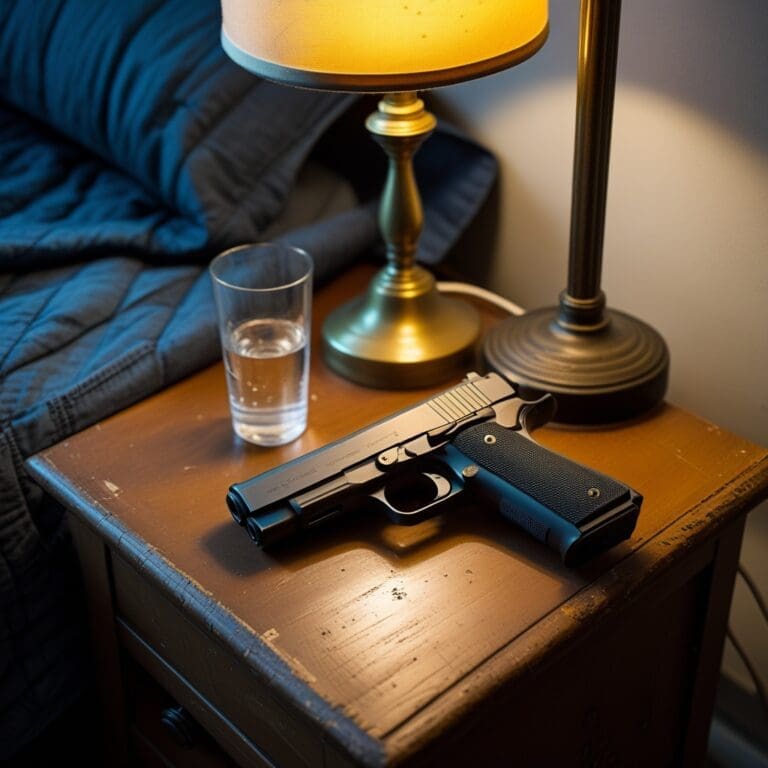
The 38 Super is a high-pressure, semi-automatic pistol cartridge originally developed in 1929 that fires a .355-inch diameter bullet at velocities exceeding many 9mm loads. It was built for the Colt Government Model as a way to give law enforcement and civilian shooters more stopping power than the standard .38 ACP round of the era could deliver. Nearly a century later, the cartridge has carved out a specific niche among competitive shooters and 1911 enthusiasts, rather than fading into obscurity like many of its early 20th-century contemporaries. According to the National Shooting Sports Foundation’s annual ammunition trend reports, niche pistol calibers like the 38 Super continue to see steady demand from the competitive shooting community even as mainstream calibers dominate overall sales volume. This article explains what makes the round distinct, how it compares to 9mm, and why practical shooting competitors still load it into their pistols today.
Key Takeaways
- The 38 Super was introduced by Colt in 1929 and uses a .355-inch bullet, the same diameter as 9mm Luger, but in a longer case (0.900 inch versus 0.754 inch) that generates higher pressure and roughly 100 to 150 fps more velocity from a 5-inch 1911 barrel.
- SAAMI lists the maximum average pressure for 38 Super +P at 36,500 psi, compared to 35,000 psi for standard 9mm Luger. Most factory ammunition on shelves today is loaded to the +P spec, since the original lower-pressure 38 Super is largely obsolete.
- Typical factory loads run 115 to 130 grains, with velocities between 1,130 and 1,300 feet per second, giving it a flatter trajectory than 9mm at typical defensive and competition ranges of 10 to 25 yards.
- The round remains popular in USPSA Open division competition because it can reach the 165 major power factor with less felt recoil than a .45 ACP loaded to the same standard, letting shooters run faster split times on multi-target stages.
- Expect to pay between $22 and $35 per box of 50 rounds for practice-grade 38 Super ammunition, with premium defensive loads like Hornady Critical Duty or Federal HST running $28 to $45 per box of 20.

What Is 38 Super?
The 38 Super, also stamped on cartridge headstamps as .38 Super Auto or .38 ACP+P, is a rimless, bottlenecked pistol cartridge that fires the same .355-inch diameter bullet used in 9mm Luger. Colt introduced it in 1929 as an upgraded version of the earlier .38 ACP, aiming to give the Colt Government Model enough power to punch through the steel body panels and early ballistic vests that criminals used during the Prohibition era. The cartridge sat in a strange middle ground for decades, respected by handloaders and a small circle of 1911 shooters but overshadowed commercially by the .45 ACP and, later, the 9mm Luger.
Its second life began in the 1980s and 1990s, when practical shooting competitors discovered that the 38 Super’s case capacity and pressure allowed handloaders to reach major power factor thresholds required by USPSA and IPSC rulebooks while keeping recoil manageable in compensated pistols. That competitive niche is where the cartridge still lives most actively today, even though defensive and hunting use has grown modestly as more manufacturers load factory ammunition for it.
What Are the Ballistic Specifications of 38 Super Ammo?
The Sporting Arms and Ammunition Manufacturers’ Institute (SAAMI) sets the maximum average pressure for 38 Super +P at 36,500 psi, roughly 4 percent higher than the 35,000 psi ceiling for standard 9mm Luger. That extra pressure, combined with a case length of 0.900 inches (compared to 0.754 inches for 9mm), gives the 38 Super a meaningful velocity edge with comparable bullet weights.
Common factory specifications include the following:
- 115-grain loads: approximately 1,280 to 1,300 feet per second, generating roughly 425 to 430 foot-pounds of energy at the muzzle.
- 124-grain loads: approximately 1,215 to 1,240 feet per second, generating around 405 to 415 foot-pounds of energy.
- 130-grain loads: approximately 1,130 to 1,160 feet per second, generating roughly 370 to 385 foot-pounds of energy.
- Overall cartridge length: 1.280 inches, which is longer than the 1.169-inch overall length of most 9mm Luger loads.
Because of this case geometry, 38 Super will not chamber or feed reliably in a firearm built for 9mm Luger, and the reverse is also true. The two cartridges share a bullet diameter but nothing else about their case dimensions is interchangeable.
38 Super vs 9mm: How Do They Compare?
Shooters researching 38 Super vs 9mm usually want to know whether the extra pressure and cost actually translate into a meaningful performance difference. In most defensive and range-use scenarios, the answer is a modest yes on paper, but the practical difference is smaller than the pressure numbers might suggest.
- Muzzle velocity: 38 Super typically runs 60 to 100 feet per second faster than a comparable 9mm load at the same bullet weight.
- Recoil impulse: 38 Super produces a slightly sharper recoil impulse due to higher pressure, though this is often offset in competition pistols with a compensator or heavier slide.
- Magazine capacity: Because the 38 Super case is longer, magazines of the same physical size typically hold one or two fewer rounds than an equivalent 9mm magazine.
- Ammunition cost: 9mm remains 30 to 45 percent cheaper per round in most retail markets, since it is the most manufactured centerfire pistol cartridge in the United States.
- Ammunition availability: 9mm is stocked by virtually every ammunition manufacturer and retailer, while 38 Super is produced by a smaller list of brands including Armscor, Winchester, Federal, and Remington.
- Competition use: 38 Super handloaded to major power factor (165) is favored in USPSA Open division, while 9mm is the standard choice for Carry Optics and Production divisions, which require only minor power factor (125).
For a general-purpose defensive or range pistol, 9mm remains the more practical and economical option for the vast majority of shooters. The 38 Super earns its keep in a narrower, more specialized role, which the next section covers in detail.
What Pistols Are Chambered in 38 Super?
Nearly all 38 Super pistols are built on the 1911 platform, a legacy of the cartridge’s origin in the Colt Government Model. Colt still produces a 38 Super variant of its Government Model, and custom houses such as STI (now Staccato), SVI, and Strayer Voigt have built entire product lines around 38 Super race guns for competitive shooters. Springfield Armory has also offered 38 Super variants of its 1911 lineup at various points, typically aimed at USPSA and IPSC competitors who want a factory-built starting point before adding a compensator or optic.
Outside the 1911 world, chambering options narrow considerably. A handful of double-stack competition pistols, often custom-built or semi-custom, are offered in 38 Super for Open division shooters who want higher magazine capacity along with the cartridge’s ballistic profile. If you are shopping for a platform, it helps to browse semi-auto pistols chambered for rounds like 38 Super to compare frame sizes, compensator options, and price points side by side before committing to a specific model.
Why Do Shooters Still Use 38 Super Today?
The primary reason 38 Super has survived nearly a century of caliber trends is competitive shooting, specifically USPSA Open division. Open division rules allow compensators, red dot optics, and extended magazines, and scoring rewards shooters who make major power factor (a minimum of 165, calculated as bullet weight in grains multiplied by velocity in feet per second, divided by 1,000). A 38 Super loaded with a 124-grain bullet at 1,340 feet per second comfortably clears that threshold while producing less muzzle rise than a similarly scored .45 ACP or 10mm load, particularly when paired with a properly tuned compensator.
According to USPSA’s published Production and Open division statistics, a large share of top-placing Open division shooters at national-level matches still run 38 Super rather than 9mm major or .40 caliber loads, largely because of how well the cartridge’s pressure curve works with compensator porting. That combination of speed, controllability, and scoring efficiency is difficult to replicate with other calibers, which is why serious competitors have stuck with it for decades rather than switching to more commonly available rounds.
Beyond competition, a smaller group of shooters chooses 38 Super for hunting small to medium game or for general range use simply because they already own a 1911 chambered for it, or because they appreciate the flatter trajectory and slightly higher energy compared to 9mm at typical handgun engagement distances of 7 to 25 yards.
How Much Does 38 Super Ammo Cost?
Expect to pay noticeably more for 38 Super than for comparable 9mm ammunition, primarily due to lower production volume rather than any difference in raw material cost. Typical retail pricing breaks down as follows:
- Practice-grade FMJ (115 to 130 grain): $22 to $35 per box of 50 rounds, or roughly $0.44 to $0.70 per round.
- Premium defensive hollow point loads: $28 to $45 per box of 20 rounds, or roughly $1.40 to $2.25 per round.
- Competition-specific major power factor loads: $30 to $40 per box of 50, though many Open division shooters handload to control cost and consistency at scale.
- Bulk case purchases (500 to 1,000 rounds): can reduce per-round cost by 8 to 15 percent compared to buying individual boxes, depending on the retailer and current market supply.
By comparison, practice-grade 9mm FMJ typically runs $14 to $22 per box of 50, which illustrates the roughly 40 percent premium shooters accept for choosing 38 Super. Handloading can narrow that gap significantly. A shooter loading their own 38 Super ammunition with once-fired brass, small pistol primers, and bulk bullets can often bring the per-round cost down to $0.20 to $0.30, though this requires an upfront investment in reloading equipment typically ranging from $300 to $800.
Is 38 Super Ammo Hard to Find?
38 Super is a specialty cartridge, so it will not be stocked in the same quantity as 9mm or .45 ACP at most retailers, but it is far from impossible to find. Major manufacturers including Armscor, Winchester, Federal, and Remington maintain 38 Super in their regular production lineups, and most well-stocked ammunition retailers carry at least one or two loadings at any given time. Shooters who compete regularly in USPSA Open division typically order in bulk quantities of 1,000 rounds or more to avoid running short before a match season, since local retail availability can be inconsistent depending on region.
If you currently own or are considering a pistol in this caliber, it is worth checking current stock before assuming a trip to a local retailer will turn up what you need. You can see what 38 Super loads are currently stocked alongside other handgun ammo to compare bullet weights, pricing, and case quantities in one place rather than calling around to multiple stores.
Frequently Asked Questions
Is 38 Super the same as 9mm?
No, they are different cartridges that share only bullet diameter. Both use a .355-inch bullet, but the 38 Super case is longer (0.900 inches versus 0.754 inches) and runs at higher pressure (36,500 psi versus 35,000 psi), so the two rounds are not interchangeable in the same firearm.
Can I shoot 38 Super in a 9mm pistol?
No, and you should never attempt it. The case dimensions do not match, so a 38 Super cartridge will not chamber properly in a 9mm pistol, and forcing the issue risks a dangerous malfunction or damage to the firearm.
Why is 38 Super ammo more expensive than 9mm?
Lower production volume is the main driver. Fewer manufacturers produce 38 Super at scale compared to 9mm, which is the most widely manufactured centerfire pistol cartridge in the country, so per-unit manufacturing and distribution costs stay higher for the less common round.
Is 38 Super good for self-defense?
It can be effective, but it is not the most practical common choice. Modern 38 Super hollow point loads perform comparably to premium 9mm defensive ammunition in terms of expansion and penetration, but the higher cost and narrower magazine and pistol selection make 9mm the more common recommendation for everyday defensive carry.
Do any revolvers use 38 Super?
No, 38 Super is designed exclusively for semi-automatic pistols. Its rimless, headspacing-on-the-case-mouth design (in older loadings) or semi-rimmed design works with a magazine-fed autoloading action, not a revolver’s cylinder, so it is not offered as a revolver chambering.
Conclusion
The 38 Super occupies a specific, well-earned place in the world of pistol cartridges rather than serving as a mainstream 9mm alternative. Its higher pressure (36,500 psi compared to the 9mm’s 35,000 psi) and slightly faster velocities make it a genuine performer, but its real staying power comes from decades of proven results in USPSA Open division competition, where its power factor efficiency and compensator compatibility are difficult to match with other calibers. Top shooters load it to run compensated 1911s and 2011s that stay flat and fast on target, which is why you still see it dominate the top tables at major matches like the USPSA Nationals.
Outside of competition, the round has carved out a smaller but loyal following among handloaders who like squeezing extra performance out of a proven case design, and among collectors who appreciate its history dating back to 1929. Ammo makers like Federal, Winchester, and Hornady still produce factory loads, so supply isn’t a real concern even if it’s thinner on shelves than 9mm or .45 ACP. If you already shoot a 1911 platform, compete in practical shooting matches, or simply appreciate a cartridge with a distinct ballistic identity, the 38 Super remains a sound and well-supported choice nearly a century after Colt first introduced it.