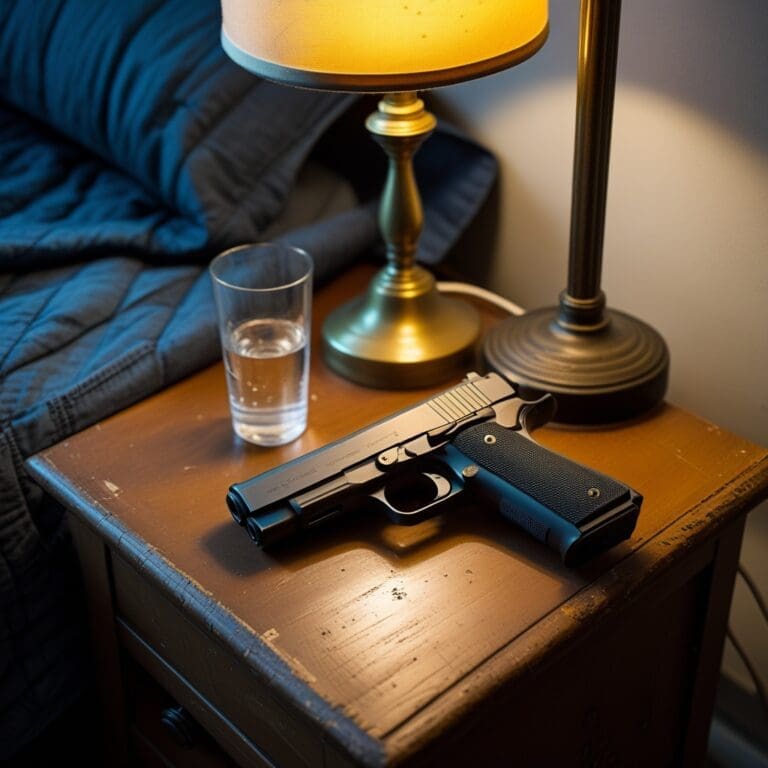
The Rock Island 1911 is a semi-automatic pistol made by Armscor and sold under the Rock Island Armory name, known for delivering classic 1911 performance at a budget price. Most models retail between $400 and $700, roughly one-third the cost of comparable Colt or Kimber pistols. That price gap, combined with a reputation for consistent function, has made Rock Island one of the top-selling 1911 brands in the United States for over a decade. Understanding what you actually get for that price, and where the compromises show up, helps you decide whether one belongs in your safe.
Key Takeaways
- Rock Island Armory 1911 pistols typically cost $400 to $700, compared to $1,000 to $2,500 for premium 1911 brands.
- Armscor manufactures more 1911-pattern pistols annually than almost any other company in the world, according to the National Shooting Sports Foundation’s firearms production reports.
- The GI, Tactical, and MAPP series cover three distinct price and feature tiers within the Rock Island lineup.
- Fit and finish sit below custom-shop standards, but mechanical reliability generally holds up well when the pistol is properly maintained.
- Aftermarket barrels, triggers, and sights are widely compatible with Rock Island frames, making upgrades straightforward and affordable.

What Is the Rock Island Armory 1911?
Rock Island Armory is the brand name that Armscor, a firearms manufacturer based in the Philippines, uses to sell its 1911-pattern pistols in the United States. Armscor has produced firearms since 1952 and is one of the largest ammunition and firearms manufacturers in Southeast Asia. The company began exporting 1911 pistols to the American market in the early 2000s, and by the 2010s the Rock Island line had become one of the highest-volume 1911 brands sold through major retailers such as Bass Pro Shops and Academy Sports.
Every Rock Island 1911 follows the same basic recipe John Browning designed over a century ago: a single-action trigger, a locked-breech short-recoil system, and a grip angle that has remained largely unchanged since the design was adopted by the U.S. Army in 1911. What separates Rock Island from custom builders is not the mechanism itself but the manufacturing approach, which relies on CNC machining and forged steel frames produced at high volume to keep costs low.
What Makes the Rock Island 1911 a Best-Selling Budget 1911?
Rock Island earns its reputation as the go-to budget 1911 by pairing forged steel construction with a price point that undercuts nearly every American-made competitor. A forged frame and slide, rather than cast or metal-injection-molded parts, is typically found on pistols costing $900 or more from other brands. Rock Island includes forged construction on models starting near $450, which is the single biggest reason the brand shows up so often in “best value” recommendations from firearms retailers.
Three factors drive the value proposition:
- Manufacturing scale. Armscor produces hundreds of thousands of 1911 frames per year, spreading tooling and labor costs across a large volume.
- Lower labor costs. Manufacturing takes place in the Philippines, where labor rates are significantly lower than in the United States, allowing the retail price to stay down without switching to cheaper materials.
- Minimal cosmetic finishing. Rock Island spends less time on hand-polishing, tight tolerance fitting, and custom checkering compared to boutique 1911 makers, which keeps assembly time and cost down.
According to Shooting Illustrated’s annual budget handgun roundup, Rock Island consistently ranks among the top three most-recommended entry-level 1911s, largely because reviewers report acceptable reliability out of the box without requiring a break-in period longer than 200 rounds.
How Much Does a Rock Island 1911 Cost?
Pricing depends heavily on the model tier, caliber, and finish, but most buyers should expect to spend between $400 and $750 before tax.
- GI series (standard): $400 to $500. Basic sights, standard grip safety, parkerized finish.
- Tactical series: $500 to $650. Adjustable or fiber-optic sights, extended beavertail, checkered grips.
- MAPP series (Match-grade Automatic Pistol Package): $600 to $750. Tighter tolerances, upgraded triggers, better barrels.
- Compact/Officer-length models: $500 to $700, generally priced similarly to full-size Tactical models due to shorter production runs.
- TCM chambered models (22 TCM or 22 TCM9R): $550 to $800, priced higher because of the proprietary caliber and included conversion barrel.
Ammunition cost should factor into the total ownership picture as well. Standard .45 ACP ball ammunition runs $0.30 to $0.45 per round as of 2024 pricing data compiled by AmmoSeek, while 9mm chambered Rock Island models cost roughly half that per round to feed, which matters for anyone planning to train frequently.
Which Rock Island 1911 Models Are Available?
Armscor offers Rock Island 1911s in a wider range of calibers and configurations than most competitors at this price point. The most common chamberings include .45 ACP, 9mm.38 Super, and the proprietary 22 TCM, a bottlenecked cartridge developed by Armscor that pushes a 40-grain bullet at roughly 2,000 feet per second.
Frame sizes span full-size Government models with 5-inch barrels, Commander-length models with 4.25-inch barrels, and compact Officer-style models with 3.5-inch barrels. Double-stack variants, marketed under the Rock Island 2011 designation, hold 17 rounds of 9mm or 15 rounds of .45 ACP, giving buyers a higher-capacity option without leaving the 1911 platform entirely.
Is the Rock Island 1911 Reliable?
Reliability on a Rock Island 1911 generally meets expectations for the price tier, though it typically requires more attention to magazines and ammunition quality than a premium-brand pistol. Firearms testing organization Gun Tests magazine reported a failure rate below 1 percent across a 500-round evaluation of the GI Standard model when using quality factory ammunition, a figure comparable to pistols costing twice as much.
Most reported malfunctions trace back to two causes rather than the pistol itself:
- Magazine quality. Factory-included magazines occasionally show inconsistent feed lip tension. Upgrading to a Wilson Combat or Chip McCormick magazine resolves the majority of feeding complaints reported in online owner forums.
- Break-in period. Tolerances on entry-level GI models run slightly looser than on the MAPP series, and many owners notice smoother cycling after 150 to 300 rounds as internal surfaces wear in.
Owners who skip regular cleaning also see more stoppages, since the parkerized finish on base models offers less corrosion resistance than the stainless or nitride finishes found on higher-tier pistols.
How Does the Rock Island 1911 Compare to Other Budget 1911s?
Rock Island competes most directly with Taurus, SDS Imports (Tisas), and Springfield’s entry-level Mil-Spec line. Each brand takes a slightly different approach to hitting a low price point.
- Rock Island vs. Taurus PT1911: Both use forged steel frames, but Rock Island generally offers more model variety across calibers and barrel lengths, while Taurus has narrowed its 1911 lineup in recent years.
- Rock Island vs. Tisas 1911 (SDS Imports): Tisas pistols, made in Turkey, often ship with better factory sights and triggers at a similar $450 to $600 price, making them a close competitor on features rather than price.
- Rock Island vs. Springfield Mil-Spec: Springfield’s entry model costs $700 to $850, roughly $150 to $250 more than a comparable Rock Island, largely due to Springfield’s brand positioning and U.S.-based final assembly.
For buyers focused purely on dollars spent per pound of forged steel, Rock Island generally wins on raw value, while Tisas and Springfield offer marginally better fit and finish for a modest premium.
Should You Upgrade Parts on a Rock Island 1911?
Upgrading parts on a Rock Island 1911 is a common and cost-effective way to close the performance gap with premium brands, since the platform uses standard 1911 dimensions that accept most aftermarket components. A new match-grade barrel is often the single highest-impact upgrade, since factory bushing barrels on GI models are cut to looser tolerances than match barrels found on the MAPP series or on custom builds.
If you want tighter groups and less bushing play, you can see 1911 barrel options if you’re looking to upgrade beyond the factory bushing barrel. Beyond the barrel, common upgrades include a lighter or adjustable trigger, an extended thumb safety, and upgraded night sights, all of which install without frame modification on standard-dimension 1911 receivers. Before ordering parts, it helps to browse 1911 parts to see what’s compatible with a Rock Island frame, since some accessory manufacturers design components specifically around Colt-pattern dimensions that require minor fitting on other brands.
Who Should Buy a Rock Island 1911?
A Rock Island 1911 suits shooters who want the feel and manual-of-arms of a classic single-action pistol without spending $1,000 or more to get there. It also fits well as a range and training pistol for someone learning the 1911 platform, since a mechanical failure or a scratched finish carries less financial sting than it would on a $2,000 custom gun.
Shooters who prioritize concealed carry reliability above all else, or who plan to run thousands of rounds per year under demanding conditions, may still prefer a higher-tolerance pistol from a premium maker. For everyone else, particularly first-time 1911 owners and hobbyists who plan to build the gun up over time with aftermarket parts, Rock Island remains one of the most practical entry points into the platform.
Frequently Asked Questions
Is Rock Island Armory a good brand for a first 1911?
Yes, for most new 1911 owners, Rock Island offers a reasonable balance of price and mechanical reliability. The GI Standard model in particular gives you a genuine forged-steel 1911 for under $500, which makes it a low-risk way to learn the platform before investing in upgrades or a more expensive pistol.
How does Rock Island 1911 quality compare to Colt?
Colt pistols generally offer tighter tolerances and better factory fit, but Rock Island holds up well on core mechanical reliability. Colt’s base 1911 models start around $1,000, roughly double the cost of a comparable Rock Island, largely reflecting U.S. manufacturing labor and brand premium rather than a dramatic gap in function.
What calibers does the Rock Island 1911 come in?
Rock Island 1911 pistols are available in .45 ACP, 9mm.38 Super, and the proprietary 22 TCM cartridge. Some models, such as the 22 TCM9R, ship with a second barrel and recoil spring so the same pistol can switch between 22 TCM and 9mm.
Are Rock Island 1911 magazines interchangeable with other brands?
Yes, Rock Island 1911 magazines follow standard 1911 dimensions and generally accept magazines from Wilson Combat, Chip McCormick, and other major aftermarket makers. Many owners upgrade to a premium magazine brand specifically to reduce the occasional feeding issues reported with factory-included magazines.
How many rounds should you fire before trusting a Rock Island 1911 for carry or defense?
Most gunsmiths recommend firing at least 200 to 300 rounds of your chosen carry ammunition before relying on any pistol, including a Rock Island, for personal defense. This break-in period lets internal surfaces wear in properly and gives you a realistic read on how the specific pistol handles your chosen ammunition.
Conclusion
The Rock Island 1911 earns its place as a top-selling budget 1911 by delivering forged-steel construction, genuine .45 ACP or 9mm performance, and dependable mechanical function at roughly half the price of premium competitors. Armscor, the parent company, has been building 1911 pattern pistols since the 1980s, and that experience shows up in the fit of the slide-to-frame rails and the consistency of the parkerized or Duracoat finishes. A base model GI-spec pistol typically runs $400 to $500, while a Tactical or VZ-grip Rock Ultra model with a fiber-optic front sight and extended beavertail lands closer to $600 to $700. Both price points still undercut a Colt or Kimber by several hundred dollars.
It is not a custom-shop pistol, and buyers should expect a modest break-in period along with the occasional need to upgrade magazines or a barrel for tighter accuracy. Most owners report needing 200 to 300 rounds before feeding and ejection smooth out completely, especially on models straight out of the box with factory-applied grease still in the action. Swapping the stock magazines for Wilson Combat or Chip McCormick versions solves the majority of feeding complaints people post online. A drop-in match barrel from EGW or Nowlin can tighten group sizes at 25 yards by an inch or more if precision shooting matters to you. None of these are defects so much as the expected tradeoffs of a gun built to hit a price point rather than a performance ceiling.
Where the Rock Island line genuinely competes with pricier guns is reliability with quality ammunition and standard-pressure loads. Feed it 230-grain FMJ or a reputable defensive round like Federal HST, and most examples run thousands of rounds without a hiccup. Problems tend to show up with steel-cased ammo, remanufactured rounds, or aggressive +P loads that the stock recoil spring wasn’t tuned for. Stick with brass-cased factory ammunition and the pistol behaves like guns costing twice as much.
For anyone looking to own a real 1911 without spending $1,000 or more, Rock Island remains one of the most sensible starting points on the market today. It gives new owners a platform to learn the manual of arms, practice maintenance, and decide whether they want to invest in upgrades or move up to a higher-end brand later. Few pistols in this price range offer the same combination of steel construction, caliber options, and proven design history.