
Most home defense shootings end after two to five rounds, but you should still carry a magazine holding at least 10 to 15 rounds to cover missed shots and adrenaline. The number that actually stops a threat is almost always smaller than what movies show. Real-world data from armed citizens and police confirms most defensive shootings inside a home happen at close range and end within seconds. Still, the capacity you keep loaded matters more than the number you expect to fire, since you can't predict which encounter turns into the exception.
Key Takeaways
- Documented civilian defensive shootings average roughly 2 to 4 rounds fired, according to long-term tracking by firearms trainer Tom Givens across more than 60 armed encounters involving his students.
- Law enforcement hit rates in real gunfights typically run between 18 and 30 percent, according to multiple police shooting studies, which explains why extra capacity matters even when few shots are truly needed.
- A full-size handgun magazine of 15 to 17 rounds, or a shotgun loaded with 5 to 8 shells, covers the vast majority of home defense scenarios with margin for error.
- Legal exposure, not just stopping power, should guide your ammunition choice; every round fired is a round you may need to account for in court.
- Red dot sights have measurably improved hit rates in both police and civilian testing, which matters more for outcomes than simply adding more rounds to the magazine.
The Hollywood Myth Versus What Actually Happens
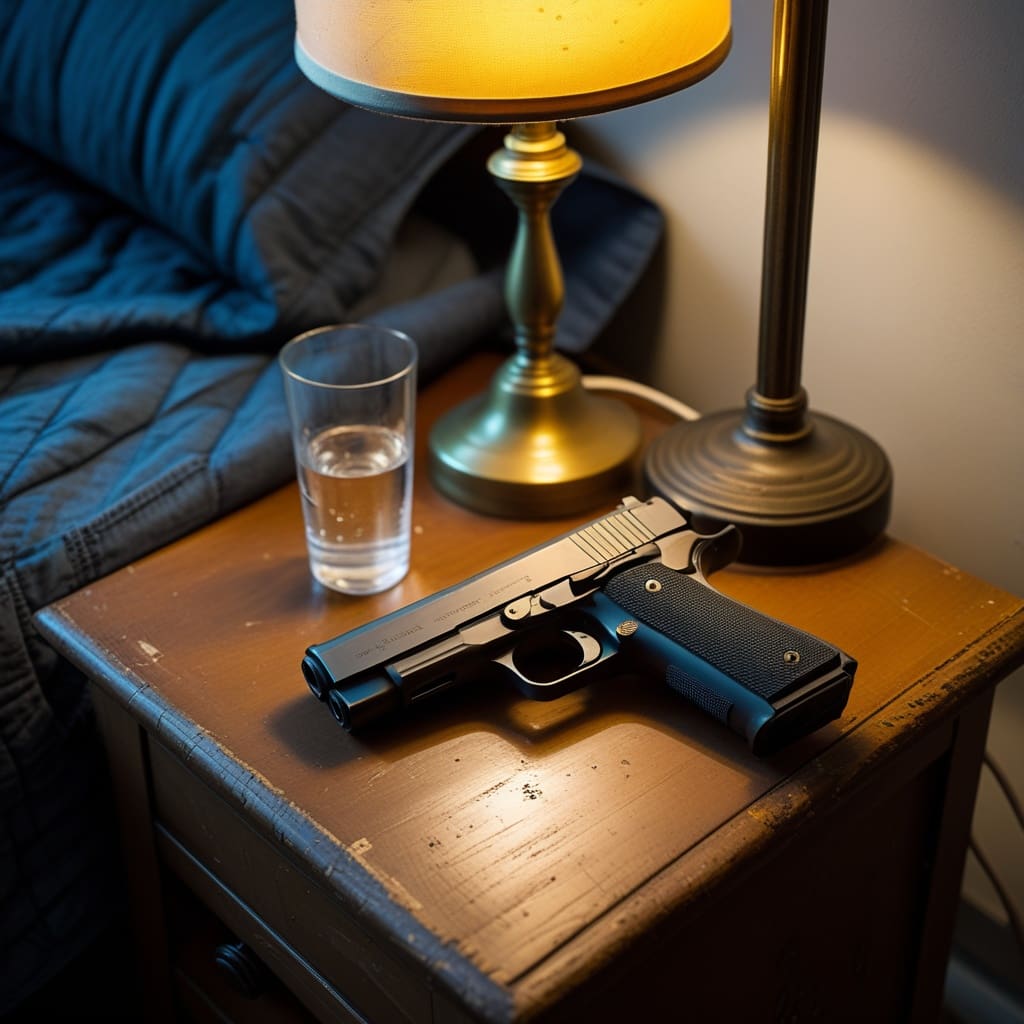
Movies and television train you to expect prolonged shootouts with dozens of rounds exchanged across a house. That is not what the data shows. In real home invasions and defensive shootings, the confrontation typically happens inside 10 feet, lasts three to five seconds, and involves far fewer shots than fiction suggests.
Tom Givens, a firearms instructor who has trained tens of thousands of private citizens since the 1980s, has tracked outcomes from students who were later involved in actual armed encounters. Of the confirmed defensive gun uses among his student base, the vast majority were resolved with one to three rounds fired, and almost none exceeded five. This pattern holds up across independent reviews of civilian defensive shootings compiled by researchers and firearms journalists over the past two decades.
The reason is straightforward. Most criminals who break into an occupied home are not looking for a fight. They want property, and when they encounter an armed, alert resident, the vast majority flee immediately, often before a shot is fired at all. The gun frequently works simply by being present and visible.
What the Statistics Actually Say About Rounds Fired
Beyond Givens’ student data, broader research on defensive gun use points in the same direction. The Centers for Disease Control and Prevention and academic criminologists estimate that Americans use firearms defensively somewhere between 500,000 and 2.5 million times per year, and in the overwhelming majority of those incidents, no shots are fired at all. The mere presence of a firearm ends the confrontation.
When shots are fired, law enforcement data offers a useful comparison point, even though officers face different circumstances than homeowners. The New York Police Department’s annual Firearms Discharge Report, one of the most detailed public records of police shooting outcomes, has shown hit rates in officer-involved shootings ranging from roughly 18 percent to 30 percent depending on the year and distance involved. If trained officers with regular firearms qualification miss more often than they hit, an untrained or infrequently practiced homeowner should expect a similar or lower hit rate under the stress of a real intrusion.
This is the core argument for carrying more rounds than you think you will need. If you expect to need three rounds but only hit your target 25 to 40 percent of the time under stress, you need considerably more than three rounds loaded to have confidence in stopping a threat. Adrenaline degrades fine motor control, narrows peripheral vision, and often causes tunnel vision that affects aim, especially in the low light conditions typical of nighttime home invasions.
So How Many Rounds Is Actually Enough?
A practical framework works better than a single fixed number, because your firearm platform changes the calculation.
- Handgun, striker-fired or hammer-fired semi-auto: Load a full magazine of 15 to 17 rounds if your platform supports it (common in double-stack 9mm pistols like the Glock 19 with a 15-round magazine or the Glock 17 with a 17-round magazine). Keep a spare magazine nearby if possible, though most encounters will never require a reload.
- Revolver: Standard capacity runs 5 to 6 rounds. Because reloads are slower under stress, consider a speed loader or speed strip staged nearby, and prioritize accuracy training given the lower round count available.
- Pump or semi-auto shotgun loaded with buckshot: 5 to 8 shells in the tube is standard for home defense models like the Mossberg 500 or Remington 870. A single well-placed load of 00 buckshot delivers 8 to 9 pellets per shot, multiplying effective hits per trigger pull.
- Rifle or pistol-caliber carbine: A 20 to 30 round magazine is common, though home defense use rarely requires anywhere near full capacity; the extra rounds mainly account for missed shots and multiple intruders.
Across all platforms, the guiding principle is the same: carry more than the statistical average you expect to use, because the average does not account for the worst-case scenario, and worst-case planning is the entire point of keeping a defensive firearm in the first place.
Factors That Change the Calculation
A few concrete variables shift how much ammunition makes sense for your household. Each one deserves its own thought instead of a blanket answer.
- Home size and layout. A small single-story home with one hallway to defend needs a different plan than a large two-story house with multiple entry points and family sleeping in separate rooms.
- Number of potential intruders. Multi-attacker invasions are less common than single-intruder break-ins, but they mean split attention and multiple targets, which raises the realistic round count.
- Training frequency. Shooters who hit the range monthly and dry-fire at home hit targets more consistently under stress than those who shoot once or twice a year.
- Ammunition type. Hollow-point rounds like Federal HST or Speer Gold Dot transfer more energy on the first hit, often reducing the number of rounds needed to stop a threat compared to full metal jacket.
- Sight system. Red dot sights improve hit rates, especially in low light and under stress, by letting you focus on the threat instead of aligning iron sights. Law enforcement agencies that switched duty pistols to red dots have seen measurable accuracy gains in both qualification and real incidents.
The goal of a home defense loadout is not to fire the most rounds possible. It is to have enough rounds available that running out is never the reason an encounter goes wrong.
The Emotional Weight of the Decision
Choosing how much ammunition to keep loaded is not purely a technical exercise. It carries real emotional weight, because you are planning for the possibility of using lethal force inside your own home, often against a stranger, sometimes in front of your children. Many firearms owners underestimate how heavily this reality weighs on decision-making until they actually sit down to plan a home defense strategy.
Overloading on ammunition capacity out of fear can lead to poor judgment, including firing more rounds than necessary in a moment of panic. Underpreparing out of denial that a violent encounter could ever happen to you leaves you vulnerable in the rare case that it does. The healthiest approach treats ammunition capacity as one part of a broader plan that includes a verbal warning system, a safe room concept for family members, and a clear decision tree for when force becomes necessary under the castle doctrine or stand your ground laws recognized in most states.
Legal counsel matters here as much as tactical planning. Every state treats self-defense law differently, and some require you to demonstrate that lethal force was reasonable and proportional to the threat. Consulting with a local attorney familiar with self-defense statutes in your state, and understanding how your state defines reasonable force, is just as important as choosing the right magazine capacity.
Building a Realistic Home Defense Loadout
A sound loadout balances legal reasonableness, practical capacity, and training realism. Consider the following breakdown as a starting template rather than a rigid rule.
- Primary firearm, loaded and staged: Full magazine capacity for your platform (15 to 17 rounds for a common 9mm handgun, 5 to 8 shells for a shotgun).
- Secondary firearm or backup magazine: Optional but recommended for households with multiple adults capable of safely handling a firearm, or for larger homes with more square footage to cover.
- Practice ammunition budget: Plan to fire at least 100 to 150 rounds per month through your home defense firearm if you want to maintain proficiency, according to guidance commonly given by certified firearms instructors through organizations like the United States Concealed Carry Association.
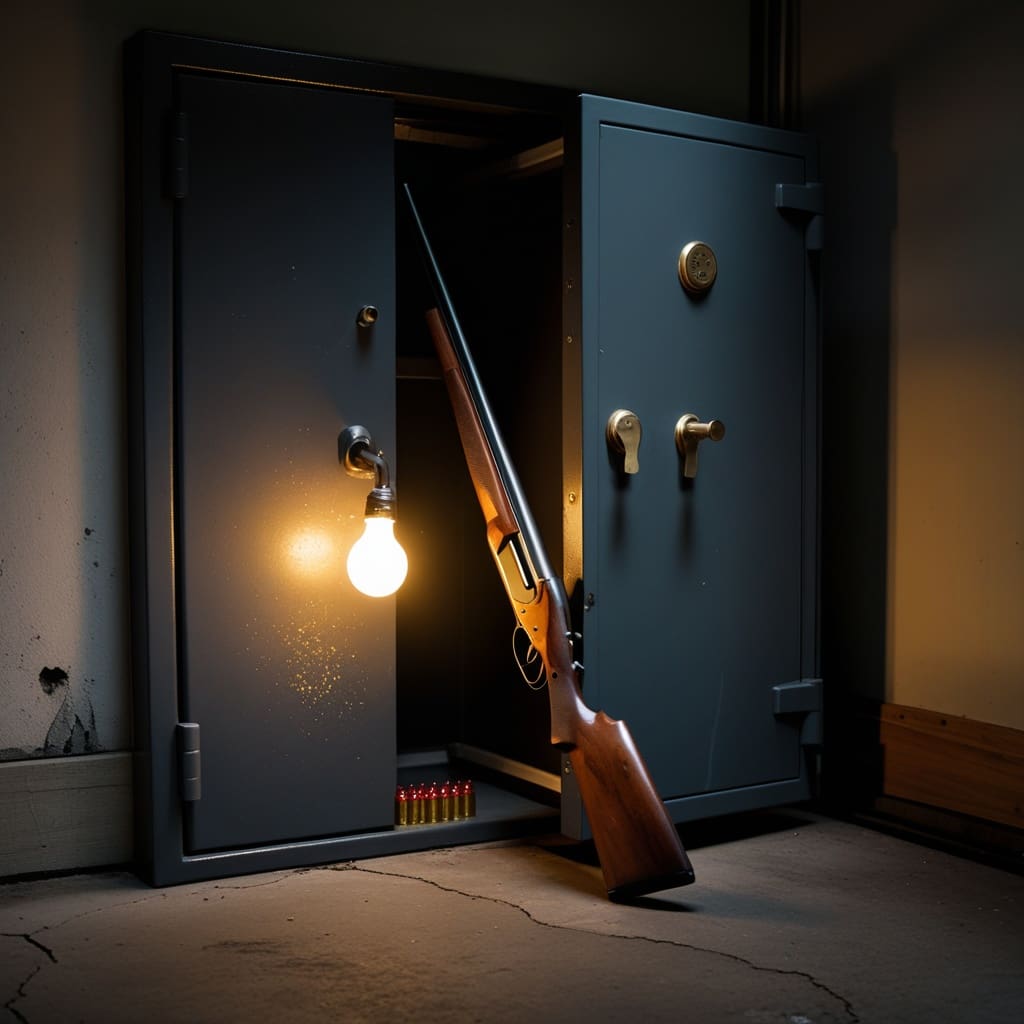
- Storage: A quick-access biometric or keypad safe, such as models from Vaonis, Fort Knox, or similar manufacturers, keeps the firearm secured yet accessible within 3 to 5 seconds, which matters more for outcomes than raw round count.
Notice that training ammunition, not defensive ammunition, makes up the largest ongoing quantity in this plan. Firing 100 to 150 practice rounds a month builds the muscle memory that determines whether your 2 to 5 defensive rounds actually land, which circles back to the hit-rate statistics discussed earlier. Capacity without competence solves nothing.
Common Mistakes Homeowners Make With Ammunition Capacity
Several recurring errors show up across firearms training classes and post-incident reviews, and avoiding them matters more than chasing a specific round count.
- Storing a firearm unloaded for safety, then losing critical seconds during an actual break-in. A defensive firearm that requires loading during an emergency defeats its own purpose; secure storage and immediate readiness are not mutually exclusive with modern safes.
- Choosing a low-capacity pocket pistol as the primary home defense gun. Compact pistols designed for concealed carry, often holding 6 to 8 rounds, work well for daily carry but leave less margin for error inside the home compared to a full-size pistol or shotgun.
- Never training with the actual home defense firearm and ammunition combination. Many owners buy a defensive round like a 12-gauge 00 buckshot load and never pattern test it at home defense distances of 7 to 15 feet, which means they do not know their actual spread pattern under realistic conditions.
- Ignoring optics entirely. A red dot sight added to a home defense pistol, costing between $200 and $600 depending on brand (options like the Trijicon RMR or Holosun 507C are common choices), can meaningfully improve first-shot accuracy compared to iron sights alone, particularly in low light.
- Assuming a fixed round count applies to every scenario. A single intruder scenario and a home invasion with multiple attackers require different mental models, and treating them identically leads to underpreparation for the more dangerous case.
Take Action on Your Home Defense Plan
Review your current firearm’s magazine capacity today and confirm it matches the ranges discussed above for your platform. If your primary home defense weapon holds fewer than 10 rounds, consider whether a higher-capacity option, additional practice, or an optics upgrade like a red dot sight would close that gap. Schedule range time at least once this month, and treat that session as seriously as the plan itself, because capacity without practiced accuracy accomplishes very little when seconds count.
Conclusion
The honest answer to how many rounds you need for home defense sits closer to 2 to 5 rounds fired in most real encounters, but the ammunition you keep loaded should exceed that number by a wide margin. Capacity in the 15 to 17 round range for handguns, or 5 to 8 shells for shotguns, gives you the margin to absorb missed shots, stress-induced errors, and the rare multi-intruder scenario without running dry at the worst possible moment. Pair that capacity with regular practice, a properly fitted sight system, and a clear understanding of your state’s self-defense laws, and you will be far better positioned than the round count alone suggests.
Frequently Asked Questions
Is a 10-round magazine enough for home defense?
Yes, a 10-round magazine covers the overwhelming majority of home defense scenarios. Since most encounters resolve within 2 to 5 rounds fired, a 10-round capacity provides a comfortable margin even accounting for missed shots. Some states, including California and New York, legally cap magazine capacity at 10 rounds, making this a practical baseline for residents in those jurisdictions.
Should I keep a spare magazine or speed loader nearby?
It is a reasonable precaution, though rarely needed in practice. Documented civilian defensive shootings almost never involve a reload, but keeping a spare magazine or speed loader within reach costs little and removes one variable of uncertainty from your plan.
Does a shotgun need fewer rounds than a handgun for home defense?
Generally yes, because each shotgun shell delivers multiple projectiles. A 12-gauge shell loaded with 00 buckshot releases 8 to 9 pellets per trigger pull, meaning 5 to 8 shells in the tube provide substantially more total projectiles than an equivalent number of handgun rounds.
How many rounds do police officers typically fire in a shooting?
Studies of officer-involved shootings show an average of roughly 3 to 6 rounds fired per incident, though hit rates remain low. The NYPD Firearms Discharge Report and similar studies from other departments consistently show hit rates between 18 and 30 percent, reinforcing why extra capacity matters even in short engagements.
Does adding a red dot sight reduce the number of rounds I need?
It can improve your first-shot hit probability, which indirectly reduces how many rounds you need to stop a threat. Red dot sights help you keep both eyes open and focus on the threat rather than aligning front and rear iron sights, an advantage that becomes especially valuable in the low light conditions common during nighttime home invasions.


