Express delivery and free returns within 30 days
- info@triggerworks.com

In nearly every state, owning and using a shotgun for home defense inside an apartment is legal, provided you comply with state firearm laws, local discharge ordinances, and any restrictions written into your lease agreement. The bigger obstacles are rarely criminal statutes. They are landlord policies, condominium bylaws, and city-specific rules about storage and discharge that vary from one jurisdiction to another. Understanding the difference between what the law permits and what your lease permits is the single most important step before you bring a shotgun into a rented unit.
This distinction trips up a large number of renters every year. A tenant may be fully within their Second Amendment rights and state law, yet still violate a lease clause that prohibits firearms in common areas or requires written notice to the property manager. Below, you will find a breakdown of the actual legal landscape, the practical safety issues unique to apartment living, and the storage and ammunition choices that matter most when square footage is limited.
Defending a single-family house and defending an apartment unit are not the same exercise, even though the underlying legal principles overlap. In a house, a missed shot or an over-penetrating round travels into a yard, a street, or an exterior wall. In an apartment, that same round can pass through a shared wall, floor, or ceiling into a space occupied by a neighbor. This single fact reshapes almost every decision you make about firearm selection, ammunition, and storage.
Distance is also compressed. Many apartment hallways and living rooms measure less than 15 feet from end to end, which changes how a shotgun’s spread pattern behaves and how much time you have to identify a threat before deciding to fire. The margin for error shrinks considerably compared to a detached home with more square footage and thicker exterior walls. These physical realities do not make a shotgun illegal to own, but they do make certain configurations and ammunition choices far more sensible than others.
No federal statute bans possessing a shotgun inside a rented residence, and the Supreme Court’s decision in District of Columbia v. Heller (2008) affirmed that the Second Amendment protects an individual’s right to keep a firearm in the home for self-defense. That protection applies to renters just as it applies to homeowners. Most states follow this same baseline, treating an apartment as a legal “residence” or “dwelling” for firearm possession purposes.
Where things get more complicated is at the state and municipal level. A handful of jurisdictions, including New York City, Chicago, and parts of California, impose additional registration or permitting requirements before a resident can lawfully possess certain firearms, though shotguns typically face fewer restrictions than handguns or specific rifle configurations. States such as Illinois require a Firearm Owner’s Identification (FOID) card before purchasing any firearm, including a shotgun, and that requirement applies equally whether you live in a house or a rented unit.
Safe-storage laws add another layer. States including Massachusetts, California, and Colorado require firearms to be stored in a locked container or with a locking device when not in use, particularly if a minor could access the residence. Massachusetts General Laws Chapter 140, Section 131L imposes this requirement broadly, and violations can result in fines up to $10,000 for a first offense involving a minor gaining access. These storage laws apply identically to apartment dwellers and homeowners, so the format of your residence does not change your compliance obligations.
State law isn’t the only thing that governs guns in an apartment. Your lease, your building’s bylaws, and city ordinances can all add restrictions on top of it.
Public housing adds another layer. HUD guidance says housing authorities generally can’t ban firearm possession outright for lawful tenants, but they can still enforce storage and discharge rules. If you live in HUD-subsidized housing, ask your housing authority for its written firearm policy instead of assuming one exists.
Over-penetration is the biggest safety argument against shotgun buckshot in apartments, and testing backs it up. FBI Ballistic Research Facility data and independent gel tests show standard 12-gauge 00 buckshot, moving at 1,200 to 1,325 feet per second, can punch through 12 to 18 inches of ballistic gel and multiple layers of half-inch drywall with enough force left to hurt someone on the other side.
An interior apartment wall is usually just two layers of thin drywall over studs, nowhere near as tough as exterior brick or concrete. Ammunition makers and independent researchers have found full-power buckshot can pass through four or more interior walls before slowing down. That matters when your unit shares walls with neighbors on multiple sides.
Reduced-recoil buckshot (roughly 1,000 to 1,150 feet per second) and birdshot typically stop one to two walls sooner than full-power tactical loads, which is why they’re recommended more often for apartments.
This is why home defense instructors often steer apartment dwellers toward reduced-recoil 00 buckshot or number 4 or 6 birdshot indoors. You lose some stopping power, but you cut the odds of a round leaving your unit and hitting a neighbor.
A 12-gauge shotgun fired indoors produces a muzzle blast between 155 and 165 decibels, a level that exceeds the threshold for immediate hearing damage (roughly 140 decibels for impulse noise) by a wide margin. In an enclosed hallway or living room, this sound is amplified by hard surfaces and close walls, which means you should expect temporary hearing loss, disorientation, or tinnitus if you fire without hearing protection, something almost no one has time to put on during an actual home invasion.
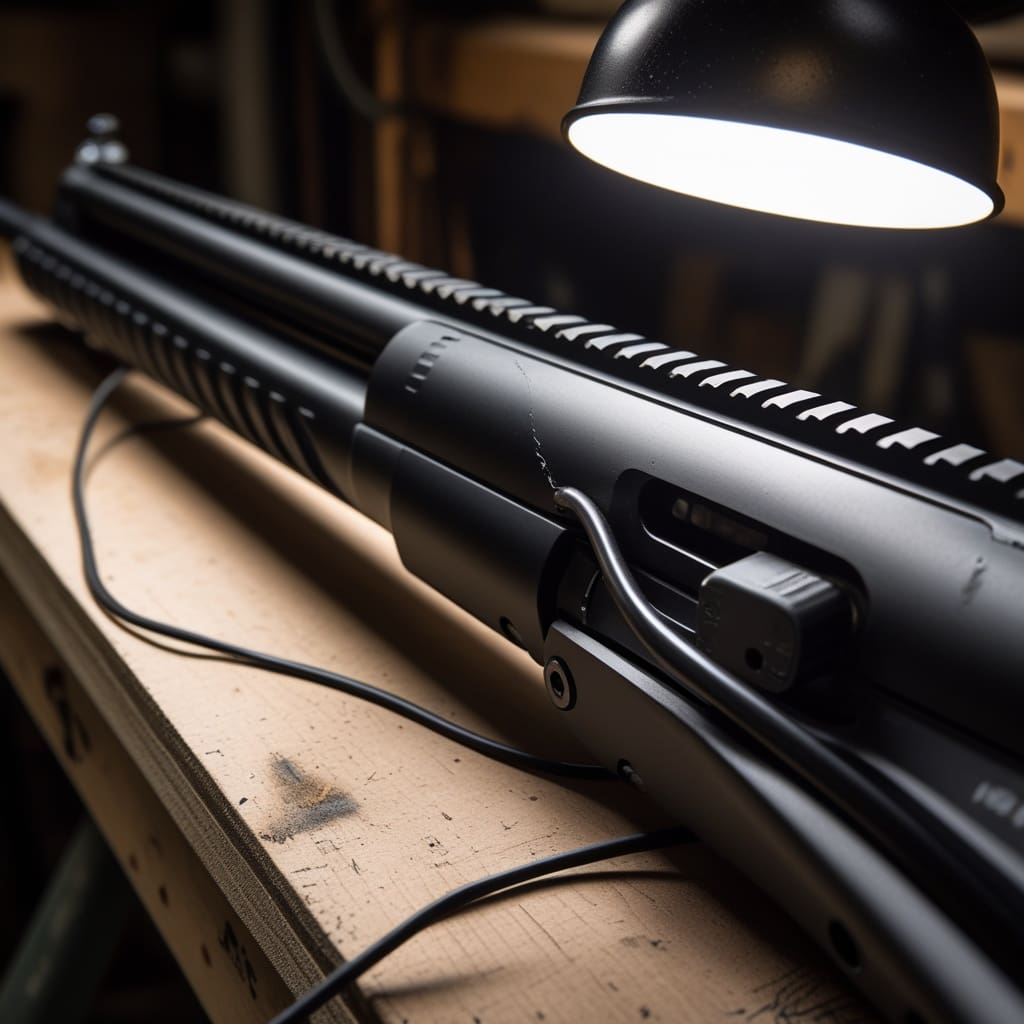
Barrel length and overall length matter more in an apartment than almost anywhere else. Federal law under the National Firearms Act sets 18 inches as the minimum legal barrel length for a shotgun without additional registration, and 26 inches as the minimum overall length. A shotgun with an 18.5-to-20-inch barrel is legal in every state and offers noticeably better handling in a hallway, doorway, or small bedroom than a 26-to-28-inch hunting-length barrel designed for open fields.
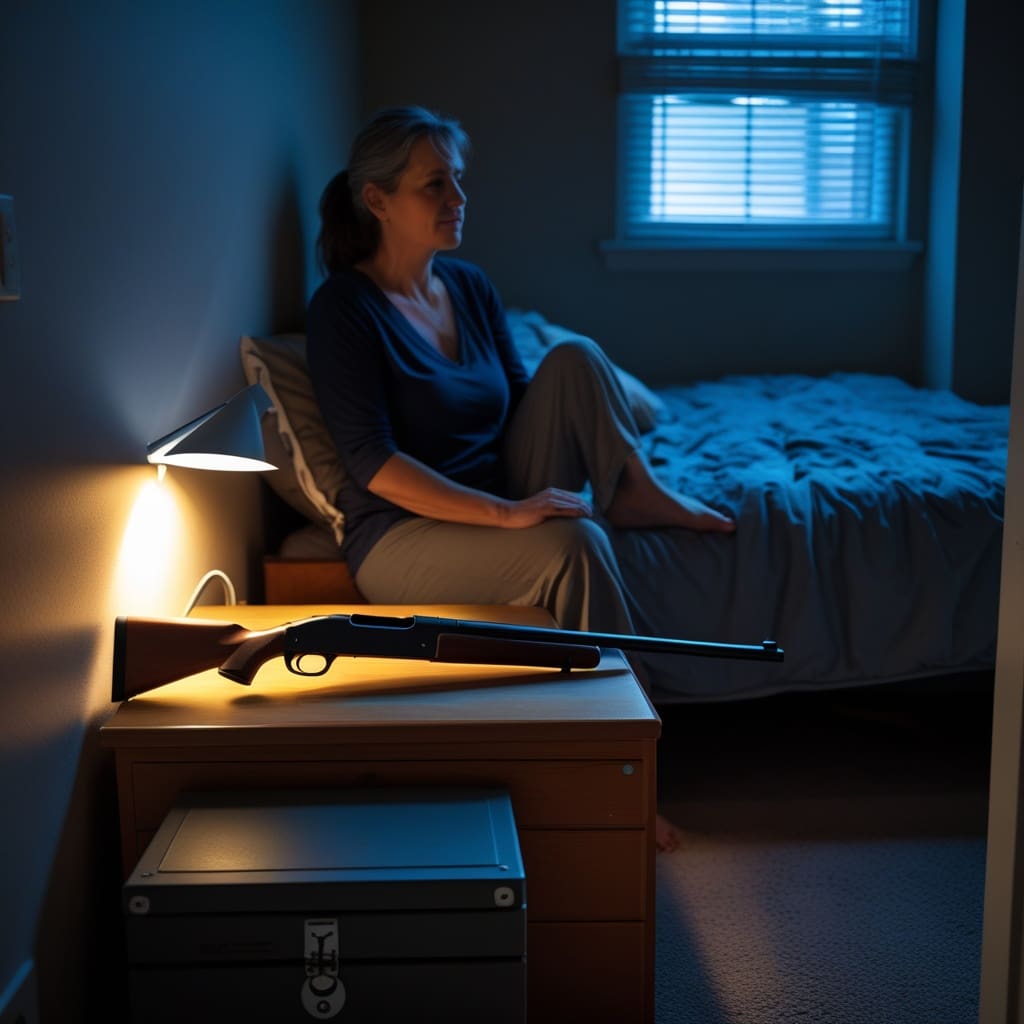
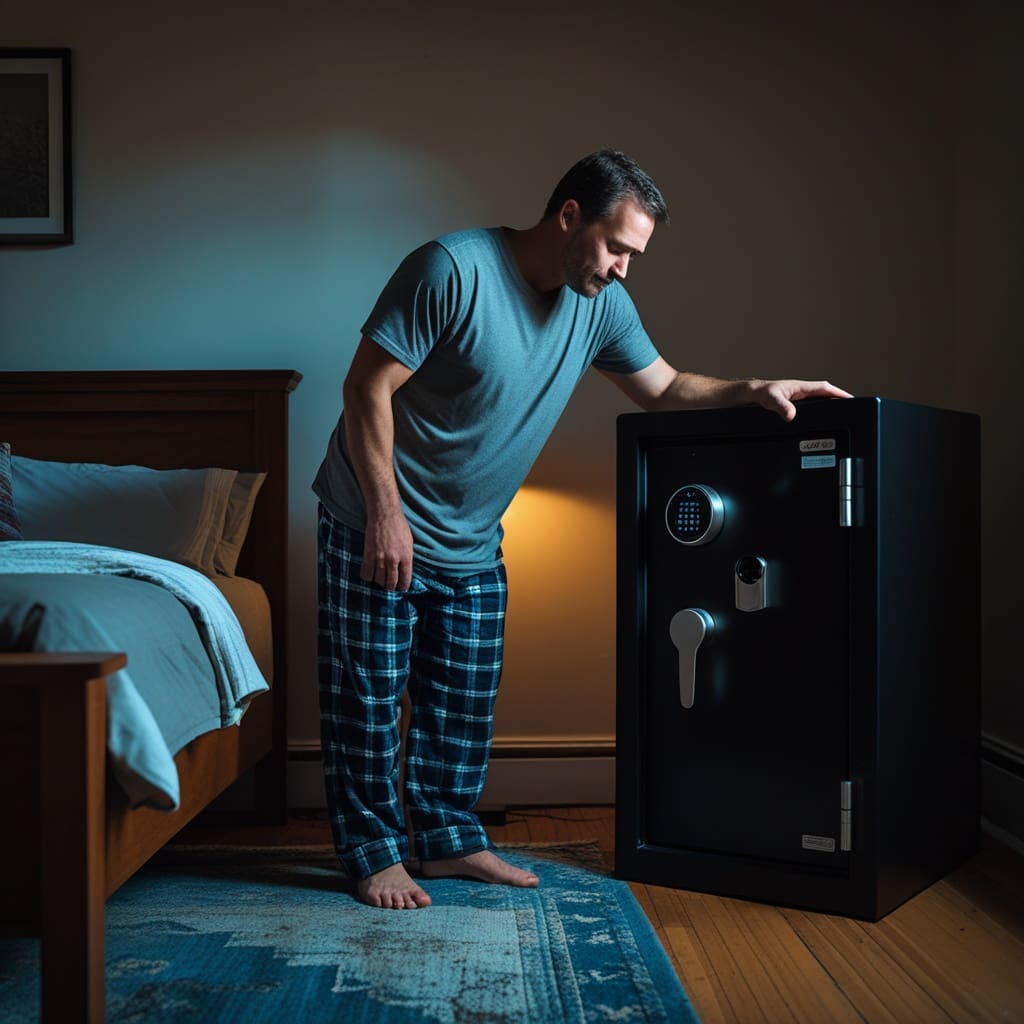
A shotgun in an apartment needs secure storage, and small spaces make that harder since there’s less room to tuck away a locking cabinet or safe. Basic steel long-gun safes run $150 to $400, while larger vault-style models start around $500.
Check whether your storage option requires drilling into walls or floors, since many leases ban that without landlord approval. Freestanding safes that use weight and a bolted base plate skip this issue and still meet most state safe-storage laws.
Weigh these three priorities together:
Following a short, deliberate process before bringing a shotgun into your apartment reduces both legal risk and safety risk substantially.
A recurring point of confusion among renters is the assumption that state firearm rights automatically override a private lease agreement. In practice, courts have generally treated a lease as a private contract, meaning a landlord can lawfully include a no-firearms clause even in a state with strong gun rights protections, provided the clause does not conflict with a specific state statute protecting tenant firearm possession. A small number of states, including Wisconsin and a few others, have passed laws limiting a landlord’s ability to prohibit firearm possession entirely, but these protections are not universal, and you should not assume your state has one without checking directly.
If your lease contains a firearms restriction and you are unsure whether it is enforceable in your state, contacting a local tenant rights organization or a firearms attorney before signing (or before moving a shotgun in) is a far better approach than testing the clause after the fact through an eviction notice. Legal aid clinics in most major metro areas offer free or low-cost consultations for exactly this kind of lease question.
Before you purchase a shotgun for apartment defense or move an existing one into a new rental unit, take thirty minutes to pull three documents: your lease agreement, your state’s safe-storage statute, and your city’s discharge ordinance. Cross-referencing these three sources takes far less time than dealing with a lease violation notice or a legal gray area after an incident. If any part of your lease language is unclear, request written clarification from your property manager rather than relying on a verbal assurance, since verbal statements rarely hold up if a dispute arises later.
A shotgun is legal for home defense in an apartment across the overwhelming majority of the United States, but that legal permission comes with real conditions attached at the state, municipal, and lease level. Renters carry an added layer of responsibility that homeowners do not always face, since a private lease can restrict what state law otherwise allows. Pairing a properly configured, shorter-barrel shotgun with interior-appropriate ammunition and secure, drill-free storage addresses most of the practical safety concerns unique to multi-unit living, while a careful review of your lease and local ordinances addresses the legal ones.
Yes, in most states a landlord can include a firearms restriction in the lease. Leases are treated as private contracts, and only a handful of states have passed laws specifically limiting a landlord’s ability to prohibit firearm possession by tenants.
Yes, an 18.5-to-20-inch barrel is generally more practical than a 26-to-28-inch field barrel. Shorter barrels maneuver more easily through narrow hallways and doorways common in apartment layouts, while remaining fully legal under the federal 18-inch minimum barrel length requirement.
Yes, standard 00 buckshot can penetrate several layers of interior drywall. FBI and independent ballistics testing show full-power buckshot passing through four or more half-inch drywall layers before losing enough velocity to stop, which is why many instructors recommend reduced-recoil loads for interior use.
In most states, no special permit is required beyond standard firearm purchase requirements. Certain cities and states, including Illinois with its FOID card system, require a general firearm ownership credential, but this applies equally to renters and homeowners rather than singling out apartment dwellers.
A justified self-defense shooting is generally legal, but it will still trigger a police investigation. Local prosecutors review the circumstances to confirm the shooting met the legal standard for reasonable force, even in states with strong self-defense protections, so expect questioning and a formal review regardless of the outcome.