How to Get a Concealed Carry Permit: A State-by-State Overview

Learning how to get a concealed carry permit is one of the most important steps you can take as a responsible gun owner. The process varies widely from state to state, and knowing what to expect before you apply saves you time, money, and frustration. Whether you are a first-time applicant or moving to a new state, this guide breaks down everything you need to know about the CCW permit process. Concealed carry means carrying a firearm in a way that is hidden from public view. Most states require a permit to do this legally, though the rules around training, fees, and eligibility differ dramatically. Some states issue permits freely to qualified applicants, while others place strict limits on who qualifies. Understanding where your state falls on that spectrum is your first step. Ready to learn more? Browse the full selection of firearms and accessories at Trigger Works LLC’s online shop to find the right carry setup for your lifestyle. Understanding the Three Types of Carry Laws in the United States Before you apply for a permit, you need to understand which legal framework your state uses. There are three main categories that determine how easy or difficult the CCW permit process will be for you. Permitless carry (Constitutional carry): No permit is required for eligible adults to carry concealed. Over half of U.S. states now fall into this category, though many still offer optional permits for reciprocity purposes. Shall-issue states: The government must issue you a permit if you meet the stated legal requirements. These states include North Carolina and most of the country. There is no room for official discretion if you qualify. May-issue states: Officials have discretion to deny your application even if you meet the basic requirements. These states often require you to demonstrate a specific need to carry. Knowing your state’s category tells you how much control you have over the outcome of your application. In a shall-issue state, meeting the requirements virtually guarantees approval. Common Eligibility Requirements Across Most States While specifics vary, most states share a core set of eligibility requirements for concealed carry applicants. Meeting these baseline standards is essential before you invest time in the application process. Be at least 18 or 21 years old, depending on the state Be a U.S. citizen or legal permanent resident Have no felony convictions on your record Have no domestic violence misdemeanor convictions or restraining orders Have no history of mental illness that resulted in involuntary commitment Not be under indictment for a felony offense Not be an unlawful user of controlled substances These requirements come from both federal law and state statutes. Even in permitless carry states, these disqualifiers still apply. Breaking any of them means you cannot legally carry a concealed firearm, permit or not. How to Apply for Concealed Carry: The Step-by-Step Process The application process shares a common structure in most shall-issue states. Following these steps in order keeps you organized and reduces delays. 1. Confirm Your Eligibility Review your state’s specific list of disqualifiers before spending any money. If you have any criminal history, consult an attorney first. A disqualifying record you are unaware of can result in a denial or worse. 2. Complete a State-Approved Firearms Training Course Most states that require training specify a minimum number of classroom and range hours. The course typically covers safe handling, state carry laws, use-of-force rules, and a live-fire qualification. In North Carolina, for example, you must complete a handgun safety course that includes a shooting qualification component before you can apply for your concealed handgun permit (CHP). 3. Gather Your Required Documents Common documents include a valid government-issued photo ID, proof of residency, your training certificate, and any required application forms. Some states also require passport-style photos or proof of citizenship. Check your county sheriff’s office or state police website for the exact list. 4. Submit Your Application and Pay the Fee Most applications are submitted in person at your local sheriff’s office or state police headquarters. Fees range from under twenty dollars in some states to over a hundred dollars in others. Some states allow online submission, but many still require an in-person visit for fingerprinting. 5. Pass a Background Check Every state that issues permits runs an applicant through the National Instant Criminal Background Check System (NICS). This is the same system used for firearm purchases at licensed dealers. The check confirms you meet federal and state eligibility standards. 6. Wait for Processing and Receive Your Permit Processing times vary from a few days to several months. North Carolina, for instance, gives the sheriff’s office 45 days to approve or deny a CHP application once all materials are received. Keep your training certificate and application receipt in a safe place during this window. State-by-State Overview of Key Differences No two states handle the CCW permit process exactly the same way. The table below highlights how several states differ across the most important variables. State Permit Type Training Required Typical Processing Time North Carolina Shall-Issue Yes Up to 45 days Texas Permitless / Shall-Issue Not required to carry; required for LTC 60 days Florida Shall-Issue Yes Up to 90 days California Shall-Issue Yes 90 days or more Arizona Permitless / Shall-Issue Not required to carry 60 days for optional permit New York Shall-Issue (strict) Yes Several months to over a year This table is a general overview only. Always verify current requirements directly with your state or county issuing authority before you apply. Reciprocity: Using Your Permit in Other States Reciprocity means one state agrees to honor another state’s concealed carry permit. This matters if you travel frequently or cross state lines for work. A North Carolina CHP, for example, is honored in dozens of other states, but it is not valid everywhere. Before carrying in any state other than the one that issued your permit, research that state’s reciprocity agreements. Some states with strict laws do not honor any out-of-state permits. Carrying without a valid permit in
Best Red Dot Sights for Pistols in 2026: Tested at the Range

Finding the best red dot sight for pistol use is one of the most impactful upgrades you can make to your handgun. A red dot sight is a small, battery-powered optic that projects a glowing dot onto a lens so you can aim faster and more accurately. The right pistol optic in 2026 can sharpen your draw time, improve target acquisition, and make accurate shots easier under stress. The problem is that the market is flooded with options at every price point. Some optics are built for competition shooting, others for everyday carry, and some for home defense. Knowing which one fits your setup before you buy saves you time, money, and frustration. In this guide we share the 10 best red dot sights for pistols, chosen for durability, brightness, mounting compatibility, and real-world performance at the range. Ready to learn more? Browse the full selection of pistol optics and accessories available in the TriggerWorks shop. # Pick Best For Typical Investment 1 Compact Enclosed Emitter Optic Everyday carry and duty use High 2 Open Emitter Competition Dot Competition and speed shooting Medium, High 3 Budget-Friendly Mini Red Dot First-time pistol optic buyers Low 4 Solar-Assisted Auto-Brightness Optic Long battery life priority Medium 5 Subcompact Micro Dot for Concealed Carry Compact carry pistols Medium 6 Multi-Reticle Pistol Optic Shooters who want reticle flexibility Medium 7 Full-Size Duty Pistol Reflex Sight Law enforcement and duty pistols High 8 Night-Vision-Compatible Pistol Dot Low-light and NV-equipped users High 9 Top-Loading Battery Optic Users who hate re-zeroing to swap batteries Medium, High 10 Shake-Awake Motion-Sensor Dot Home defense and range practice Low, Medium 1. Compact Enclosed Emitter Optic The compact enclosed emitter optic is the gold standard for everyday carry and duty use in 2026. The enclosed design protects the LED emitter from debris, rain, and hard use, making it far more reliable than open-emitter designs in rough conditions. This is the top pick if your pistol needs to perform when your life depends on it. Why It Works Best for: Everyday carry, duty, and defensive handgun use Core capability: Fully enclosed housing shields the emitter from dirt, moisture, and impact Typical investment: High, but durability justifies the cost over years of service Setup complexity: Low, most models ship with multiple mounting plates for popular pistol cuts Look for models rated to survive at least 1,000 rounds of recoil testing. Reliable zero retention is non-negotiable for a carry optic. 2. Open Emitter Competition Dot Open emitter optics have a wider, unobstructed field of view compared to enclosed designs. That makes them a favorite in competition shooting where split-second target transitions matter most. If you shoot USPSA, IDPA, or any timed pistol sport, this style of handgun red dot gives you a clear edge. Why It Works Best for: Competition shooters and speed-focused range work Core capability: Wide window lets you find the dot faster during rapid target transitions Typical investment: Medium to high depending on glass quality and dot brightness Time to value: Immediate improvement in split times once you train the draw stroke Open emitters are more exposed to fouling, so clean the lens regularly if you shoot suppressed or in dusty environments. 3. Budget-Friendly Mini Red Dot Not every shooter needs a premium optic on day one. Budget-friendly mini red dots have improved dramatically in recent years and now offer acceptable brightness, basic waterproofing, and solid zero retention for range use. This is the smartest entry point if you are new to pistol optics best pistol optic decisions and want to learn the platform before investing more. Why It Works Best for: New shooters testing the pistol optic concept for the first time Core capability: Basic brightness adjustment and reliable co-witness with iron sights Typical investment: Low, usually well under mid-market pricing Skill required: Minimal, plug-and-play installation on optics-ready pistol slides Set realistic expectations. Budget optics can hold zero at the range but may not survive the abuse of a carry or duty role. 4. Solar-Assisted Auto-Brightness Optic Solar-assisted optics use a small solar cell alongside the battery to extend runtime dramatically. Some models offer years of continuous use in normal lighting conditions without touching a battery. If you hate checking battery life or want a low-maintenance carry setup, this pick is hard to beat. Why It Works Best for: Shooters who prioritize long battery life and minimal maintenance Core capability: Dual-power system keeps the optic live even when the main battery is low Maintenance: Very low, most users replace batteries once a year or less Use case: Everyday carry, range pistols, and home defense firearms Auto-brightness adjusts the dot intensity based on ambient light, which means the dot stays visible day or night without manual input. 5. Subcompact Micro Dot for Concealed Carry Micro dots are smaller and lighter than standard pistol optics, making them ideal for compact and subcompact carry pistols. Reduced size means less snagging on clothing and a lower profile in a holster. Raleigh-area shooters who carry daily will appreciate how little these add to overall pistol footprint. Why It Works Best for: Compact and subcompact pistols used for concealed carry Core capability: Minimized footprint with no meaningful sacrifice in dot brightness Typical investment: Medium, a fair trade for the carry advantage Integration: Footprint-compatible with most popular micro-cut pistol slides Confirm your pistol has an optics-ready slide before purchasing. Many subcompact models now ship from the factory with a direct-mount or adapter option. 6. Multi-Reticle Pistol Optic Multi-reticle optics let you switch between a small precision dot and a larger, faster-to-find dot with a button press. This flexibility suits shooters who use the same pistol for both precision work at distance and close-quarters drills. A 3-MOA dot is great for accuracy, while a 6-MOA dot helps you find the reticle instantly in a high-stress draw. Why It Works Best for: Versatile shooters who work at multiple distances Core capability: Switchable dot sizes adapt to the shooting task at hand Typical investment: Medium, competitive with single-reticle premium models
Best Concealed Carry Guns for Women: Sized Right and Easy to Handle

Finding the best concealed carry gun for women means more than just picking the smallest pistol on the shelf. You need a firearm that fits your hand, cycles reliably, and is comfortable enough to carry every single day. The wrong choice leads to poor control, inconsistent accuracy, and a gun that stays in the drawer instead of on your body. This guide covers 10 of the best CCW pistols chosen specifically with women shooters in mind. Each pick was evaluated for grip size, slide pull weight, trigger reach, concealability, and overall reliability. Whether you are brand new to concealed carry or upgrading from your first gun, these options give you a strong starting point. Ready to find your next firearm? Browse our full selection of pistols and CCW-ready handguns in the Trigger Works online shop. # Pick Best For Typical Investment 1 Compact Striker-Fired 9mm First-time and experienced carriers Medium 2 Sub-Compact 9mm with Flush Magazine Deep concealment and pocket carry Medium 3 Small-Frame Revolver in .38 Special Simplicity and point-and-shoot reliability Low to Medium 4 Micro-Compact 9mm with Safety Shooters who prefer a manual safety Medium 5 Slim Single-Stack 9mm Smaller hands and waistband carry Medium 6 Lightweight Polymer .380 ACP Pistol Ultralight carry and purse holsters Low to Medium 7 Mid-Size 9mm with Optics Cut Slide Shooters upgrading accuracy with a red dot Medium to High 8 Hammerless Snub-Nose Revolver Snag-free draw and backup carry Low to Medium 9 Compact Double-Action/Single-Action Pistol Shooters wanting a heavier first-shot trigger Medium to High 10 Optics-Ready Subcompact with Extended Magazine Option Versatile carry with home-defense crossover Medium to High 1. Compact Striker-Fired 9mm The compact striker-fired 9mm is the most popular starting point for women choosing a CCW for the first time. It offers a consistent trigger pull, manageable recoil, and enough grip surface to maintain solid control. The 9mm caliber gives you stopping power without the harsh kick of larger cartridges. Why It Works Best for: First-time carriers and those switching from larger guns Core capability: Consistent trigger pull with no external hammer to snag Typical investment: Medium range, widely available Skill required: Beginner to intermediate This platform is widely supported with aftermarket holsters, making it easy to find a carry option that fits your body type and lifestyle. 2. Sub-Compact 9mm with Flush Magazine The sub-compact 9mm with a flush-fit magazine is purpose-built for deep concealment. It is shorter and thinner than a standard compact, which means it disappears under lighter clothing. The flush magazine keeps the grip profile short, which helps with appendix carry and smaller frame builds. Why It Works Best for: Women who need to conceal under fitted or lightweight clothing Core capability: Maximum concealability with 9mm stopping power Setup complexity: Low, most come ready to carry out of the box Use case: Everyday carry in warm climates like North Carolina summers Many sub-compact models also include a longer extended magazine for home use, so you get two carry options in one purchase. 3. Small-Frame Revolver in .38 Special The small-frame .38 Special revolver has been a trusted best pistol for women’s self defense for decades. Revolvers do not require racking a slide, which makes them accessible for shooters with less hand strength. There are no magazines to fumble with and no risk of a failure to feed. Why It Works Best for: Shooters who want the simplest possible manual of arms Core capability: Point, press, repeat with zero cycling required Maintenance: Minimal, fewer moving parts than a semi-automatic Typical investment: Low to medium, many affordable options exist The trade-off is a 5 or 6 round capacity, but for most self-defense situations that is sufficient. Choose a +P rated model for slightly more velocity if needed. 4. Micro-Compact 9mm with Manual Safety The micro-compact 9mm with a thumb safety is the right call if you feel more comfortable with an extra layer of security. A manual safety is a lever or button that physically blocks the trigger until you disengage it. This pick is especially popular with shooters transitioning from a background where safeties were standard. Why It Works Best for: Shooters who prefer a deliberate extra step before firing Core capability: Micro-size frame with external thumb safety option Ideal team size: Solo carry, not a duty gun Time to value: Short once you train the safety into your draw stroke Practice your draw at home with an unloaded firearm until disengaging the safety becomes automatic. Hesitation in a real situation costs time you may not have. 5. Slim Single-Stack 9mm A single-stack magazine holds rounds in a single column, making the grip noticeably thinner than a double-stack pistol. For women with smaller hands, this width reduction means a more natural grip and better trigger reach. You sacrifice a few rounds of capacity, but you gain comfort and control. Why It Works Best for: Shooters with small to medium hand sizes Core capability: Thin grip profile for better hand fit and control Typical investment: Medium, a strong value category Integration: Works well with inside-the-waistband and belly band holsters The slim profile also prints less under clothing, meaning the gun outline shows through less fabric, which keeps your carry discreet. 6. Lightweight Polymer .380 ACP Pistol The .380 ACP (Automatic Colt Pistol) cartridge is smaller than 9mm and generates less recoil. A lightweight polymer-frame pistol chambered in .380 can weigh under 12 ounces unloaded. That makes it easy to carry all day without fatigue, and it fits in a purse holster or pocket holster with no trouble. Why It Works Best for: Recoil-sensitive shooters and ultralight carry setups Core capability: Featherweight carry with reliable self-defense rounds available Setup complexity: Very low, minimal controls to learn Use case: Backup carry, warm weather carry, or purse carry Modern .380 hollow-point ammunition has improved significantly. This caliber is a legitimate self-defense option when paired with quality defensive rounds. 7. Mid-Size 9mm with Optics-Cut Slide An optics-cut slide has a machined recess on top that accepts a small red-dot sight.
Best Gun Cleaning Kits in 2026: Tested and Ranked for Every Firearm

Finding the best gun cleaning kit is not as simple as grabbing the cheapest box off the shelf. The right kit protects your firearm’s bore, keeps moving parts running smoothly, and extends the life of your investment. Whether you own a 9mm pistol, a bolt-action rifle, or a home defense shotgun, the cleaning supplies you use make a real difference in long-term reliability. In this guide, we share the 10 best gun cleaning kits for 2026, chosen for tool completeness, caliber coverage, build quality, and ease of use. We cover options suited to every firearm type and every budget tier. Use the quick-pick table below to find your match fast, then dive into each pick for a detailed breakdown. Ready to learn more? Browse the full selection of gun maintenance gear and supplies at the TriggerWorks online shop. # Pick Best For Typical Investment 1 Universal Multi-Caliber Cleaning Kit Owners of multiple firearms Medium 2 Handgun-Specific Pistol Cleaning Kit Pistol owners, compact storage Low 3 AR-Platform Rifle Cleaning System AR-15 and MSR owners Medium 4 Shotgun Bore and Chamber Cleaning Kit Shotgun shooters, hunters Low 5 Compact Tactical Field Cleaning Kit Range day carry, travel Low 6 Rimfire Precision Cleaning Kit .22 LR and rimfire owners Low 7 Bore Snake and Solvent Bundle Kit Quick post-range cleanups Low 8 Premium Hardwood Case Gun Cleaning Kit Enthusiasts, collectors, gift buyers High 9 Bolt-Action and Hunting Rifle Cleaning Kit Big-game hunters, precision shooters Medium 10 All-in-One Solvent, Oil, and Tool Combo Kit New gun owners, starter setup Medium 1. Universal Multi-Caliber Cleaning Kit A universal multi-caliber cleaning kit covers handguns, rifles, and shotguns in a single organized case. If you own more than one firearm, this is the most efficient way to stay stocked. Most kits in this category include brass rods, interchangeable jags, a range of caliber-specific brushes, patches, and a small bottle of solvent. Why It Works Best for: Shooters who own multiple calibers and want one organized solution Core capability: Covers pistol, rifle, and shotgun bores from .17 to 12-gauge Typical investment: Medium, often $30 to $60 depending on piece count Setup complexity: Low, most rods thread together in seconds Look for kits with aluminum or brass rods rather than steel, which can scratch your bore if used carelessly. 2. Handgun-Specific Pistol Cleaning Kit A handgun-specific pistol cleaning kit is built around common pistol calibers like 9mm, .40 S&W, and .45 ACP. These kits are compact, affordable, and include everything a pistol owner needs without the bulk of a universal set. They pair well with a small range bag for post-range field cleaning. Why It Works Best for: Pistol-only owners who want a focused, no-excess kit Core capability: Caliber-matched brushes, jags, and patches for handgun bores Typical investment: Low, often under $25 Maintenance: Brushes and patches need occasional replacement after heavy use Choose a kit stored in a zippered pouch rather than a rigid case so it fits easily in a range bag or nightstand drawer. 3. AR-Platform Rifle Cleaning System AR-platform rifles, like the AR-15, have a direct impingement gas system (a design that routes propellant gas back into the action) that deposits carbon buildup quickly. A dedicated AR cleaning system includes a chamber brush, bolt carrier group (BCG) scraper, and a carbon removal tool shaped for the unique geometry of these rifles. Standard rod-and-patch kits often miss the places where carbon hides most. Why It Works Best for: AR-15 and MSR owners who shoot semi-auto platforms regularly Core capability: BCG scraper, chamber brush, and .223/5.56 bore tools in one set Use case: High-volume range shooting, competition prep, and duty rifles Skill required: Beginner to intermediate; basic field strip knowledge recommended Pair this kit with a carbon-dissolving solvent designed for gas-operated rifles to cut cleaning time significantly. 4. Shotgun Bore and Chamber Cleaning Kit Shotguns collect wad residue, plastic fouling, and lead deposits at a faster rate than most other firearms. A shotgun-specific cleaning kit includes oversized bore mops, 12-gauge or 20-gauge brushes, and a chamber swab designed to scrub the forcing cone (the tapered section where the shell transitions to the bore). Hunters who shoot in wet North Carolina weather especially need consistent cleaning to prevent rust. Why It Works Best for: Hunters, clay shooters, and home defense shotgun owners Core capability: Large-bore mops, wad fouling brushes, and chamber cleaning tools Typical investment: Low to medium, usually $15 to $35 Time to value: Fast; most shotgun cleanings take under 20 minutes with the right kit 5. Compact Tactical Field Cleaning Kit A compact tactical field cleaning kit is designed to live in your range bag, backpack, or vest. It usually stores inside a rifle stock, a small pouch, or a compact tube. These kits include a collapsible cleaning rod, a bore brush, a patch holder, and a small lubricant bottle. They are not meant to replace a full bench kit but handle emergency cleaning when you are away from home. Why It Works Best for: Shooters who want a lightweight backup kit for the range or field Core capability: Bore brush, patch holder, and lube in a sub-6-inch package Typical investment: Low, often $10 to $25 Integration: Many designs fit inside AR-15 buffer tube compartments Treat this as your “emergency kit” and keep a full cleaning kit at home for thorough post-range sessions. 6. Rimfire Precision Cleaning Kit Rimfire cartridges, like the popular .22 LR, leave a unique type of fouling that differs from centerfire calibers. They deposit lead and waxy residue that needs a softer, smaller-diameter brush to remove without damaging the bore. A rimfire-specific cleaning kit comes with correctly sized tools that larger universal kits often omit or fit poorly. Why It Works Best for: .22 LR, .17 HMR, and other rimfire owners Core capability: Small-diameter bronze brushes and patch holders matched to rimfire bores Typical investment: Low, usually under $20 Maintenance: Lead solvent is often needed alongside standard bore cleaner If you shoot rimfire frequently, clean after every 500 rounds at minimum to
Best Shooting Ear Protection in 2026: Passive vs Electronic Compared

Choosing the best shooting ear protection is one of the most important decisions you will make as a shooter. A single gunshot can reach 140 to 165 decibels, well above the 85-decibel threshold where permanent hearing damage begins. The right protection keeps your hearing intact for decades of shooting. This guide covers the 10 best shooting ear protection picks for 2026, spanning passive and electronic earmuffs, foam ear plugs, and combination setups. Each pick is chosen for noise reduction performance, comfort, and real-world usability at the shooting range. Whether you are a beginner at a Raleigh indoor range or a seasoned hunter in the field, there is a setup here for you. Ready to gear up? Browse our full selection of firearm accessories and safety gear at the Triggerworks shop. # Pick Best For Typical Investment 1 Low-Profile Passive Earmuff Budget-conscious beginners Low 2 High-NRR Passive Earmuff Indoor range shooters Low to Medium 3 Entry-Level Electronic Earmuff New shooters wanting communication Medium 4 Mid-Range Electronic Earmuff Serious range shooters Medium 5 Bluetooth Electronic Earmuff Tech-forward shooters Medium to High 6 Premium Slim-Line Electronic Earmuff Rifle and AR-15 shooters High 7 Foam Ear Plug Set Lightweight and backup use Low 8 Custom-Molded Ear Plug Long-session and competitive shooters High 9 Double-Protection Plug-and-Muff Combo High-caliber and indoor shooters Low to Medium 10 Electronic In-Ear Shooter’s Plug Hunters and outdoor shooters Medium to High 1. Low-Profile Passive Earmuff A passive earmuff (one with no electronics) that sits low on the ear cups is the perfect starting point for new shooters. It blocks sound mechanically through insulated cup padding and a tight seal. This style typically carries a Noise Reduction Rating (NRR) of 22 to 27 decibels, which is enough for most outdoor ranges. Why It Works Best for: Beginners and casual range visitors who want simple, reliable protection Core capability: Consistent passive noise blocking without batteries or settings Typical investment: Low, making it easy to keep a spare pair in your range bag Setup complexity: None, just put them on and shoot Look for a padded headband and adjustable cups to keep them comfortable during longer sessions at the range. 2. High-NRR Passive Earmuff When you need serious passive protection, a high-NRR earmuff delivers. These models are built with thicker cup walls and denser foam liners to hit NRR ratings of 30 decibels or more. They are a strong choice for indoor shooting ranges where sound bounces off hard walls and amplifies impact. Why It Works Best for: Indoor range shooters using pistols or rifles in enclosed bays Core capability: Maximum passive attenuation, reducing noise to safe levels even with large-caliber firearms Typical investment: Low to medium, often only a few dollars more than a standard passive muff Maintenance: Wipe down cups regularly to keep the foam seal effective The tradeoff is that high-NRR passive muffs can muffle range commands and conversations, so stay aware of your surroundings. 3. Entry-Level Electronic Earmuff An electronic earmuff uses microphones on the outside of the cups to pick up ambient sound and play it back inside at a safe level. When a loud impulse like a gunshot is detected, the electronics cut off instantly to protect your ears. Entry-level models make this technology accessible for most budgets. Why It Works Best for: New shooters who need to hear range commands and coaching while staying protected Core capability: Sound amplification up to a safe threshold with automatic shut-off on impulse noise Use case: Group training sessions, beginner classes, and family range days Typical investment: Medium, a noticeable step up from passive but worth the upgrade 4. Mid-Range Electronic Earmuff Mid-range electronic earmuffs add better microphone quality, lower response latency, and more comfortable padding compared to entry-level models. They typically offer NRR ratings of 22 to 26 decibels combined with cleaner audio reproduction. This category is the sweet spot for regular range shooters who want performance without paying a premium price. Why It Works Best for: Intermediate shooters who visit the range several times per month Core capability: Balanced noise suppression and natural-sounding ambient audio Typical investment: Medium, with many solid options available online and in stores Ideal team size: Works well for solo or group range sessions Battery life on mid-range models has improved significantly. Most run on AA batteries and last 200 to 350 hours of use. 5. Bluetooth Electronic Earmuff A Bluetooth earmuff combines hearing protection with wireless audio streaming. You can connect your phone, take calls, or listen to a podcast between strings of fire. These models still provide full hearing protection at the shooting range, with the electronics cutting sound the moment a shot is fired. Why It Works Best for: Tech-forward shooters who want connectivity alongside protection Core capability: Wireless audio paired with automatic impulse-noise suppression Integration: Pairs easily with most smartphones and tablets via standard Bluetooth Typical investment: Medium to high depending on audio quality and brand tier Be sure the Bluetooth model you choose has a stated NRR of at least 22 decibels. Some entry-level Bluetooth muffs sacrifice noise reduction for audio features. 6. Premium Slim-Line Electronic Earmuff Slim-line electronic earmuffs are engineered with low-profile cups that sit close to your head. This design is critical for rifle and AR-15 shooters because standard wide-cup earmuffs can interfere with a proper cheek weld on the stock. Slim-line models maintain a high NRR while clearing the way for a clean shooting position. Why It Works Best for: Rifle shooters, AR-15 owners, and competitors who need clear stock contact Core capability: Low-profile cup design that does not break cheek weld Skill required: No special skills, but benefits shooters who already understand proper rifle form Typical investment: High, reflecting the specialized engineering and quality materials Slim-line does not mean low protection. Premium models in this category often match or exceed the NRR of bulkier standard cups. 7. Foam Ear Plug Set Foam ear plugs are the most portable and affordable hearing protection for shooting. When inserted correctly, they compress into the ear canal
Best Home Defense Shotguns in 2026: Power, Reliability, and Value

Choosing the best home defense shotgun is one of the most important decisions you can make as a firearm owner. A shotgun gives you raw stopping power, a wide range of ammunition options, and a level of reliability that handguns and rifles often cannot match in close-quarters situations. Whether you live in a suburban neighborhood in Raleigh or out in a rural setting, the right shotgun can make all the difference when seconds count. This guide covers the 10 best home defense shotguns for 2026, selected for reliability under stress, ease of use, value, and availability. Each pick is a distinct platform suited to a different kind of owner, budget, or situation. Whether you want a simple pump shotgun for home defense or a fast-cycling semi-auto, there is a pick here for you. Ready to learn more? Browse the full selection of defensive firearms and gear available at the Trigger Works shop. # Pick Best For Typical Investment 1 Classic 12-Gauge Pump-Action Shotgun Budget-conscious first-time buyers Low 2 Tactical Semi-Auto 12-Gauge Shotgun Experienced shooters who want fast follow-ups Medium-High 3 Compact 20-Gauge Pump Shotgun Smaller-framed shooters and recoil-sensitive users Low-Medium 4 Short-Barrel Home Defense Pump Shotgun Tight hallways and confined spaces Medium 5 Gas-Operated Semi-Auto Defensive Shotgun Shooters wanting reduced felt recoil Medium-High 6 Pistol-Grip 12-Gauge Pump Shotgun Owners who prioritize compact storage Low-Medium 7 Box-Magazine Fed Pump Shotgun Tactical users who want faster reloads Medium 8 Inertia-Driven Semi-Auto Shotgun Reliability-focused buyers on a mid-range budget Medium-High 9 Side-Folding Stock Tactical Pump Shotgun Vehicle or bedside storage with quick deployment Medium 10 Premium Duty-Grade Semi-Auto Shotgun Serious home defenders wanting law-enforcement-level gear High 1. Classic 12-Gauge Pump-Action Shotgun The classic 12-gauge pump-action is the gold standard of the home defense shotgun category. It is mechanically simple, extremely reliable, and widely available at an accessible price point. This platform has proven itself in law enforcement and civilian defense roles for over a century. Why It Works Best for: First-time defensive shotgun buyers on a tight budget Core capability: Manual pump action cycles virtually any 12-gauge load without gas or spring adjustments Typical investment: Low, making it the most accessible pick on this list Maintenance: Simple disassembly with few moving parts reduces cleaning time A practical tip: load it with buckshot, specifically 00 buckshot, which fires multiple large pellets in a single pull of the trigger. This gives you maximum stopping power at typical home defense distances. 2. Tactical Semi-Auto 12-Gauge Shotgun A tactical semi-auto 12-gauge chambers and fires a fresh shell automatically after each shot. You do not need to manually cycle the action between shots, which means faster follow-up rounds when it matters most. This platform suits experienced shooters who are already comfortable managing recoil. Why It Works Best for: Experienced defensive shooters who want speed Core capability: Semi-automatic cycling for fast, successive shots under stress Typical investment: Medium to high, reflecting the added mechanical complexity Setup complexity: Moderate, requires familiarity with the platform before relying on it defensively Train with this shotgun regularly so you can clear a malfunction quickly if it ever occurs with lower-powered loads. 3. Compact 20-Gauge Pump Shotgun The 20-gauge pump is often overlooked, but it is a serious home defense tool. It produces noticeably less recoil than a 12-gauge while still delivering enough energy to stop a threat effectively. Smaller-framed shooters, younger adults, and those sensitive to recoil will appreciate what this platform offers. Why It Works Best for: Recoil-sensitive shooters and smaller-framed users Core capability: Adequate defensive power with softer recoil impulse than 12-gauge Typical investment: Low to medium, comparable to most entry-level pump shotguns Use case: Ideal for households where multiple family members may need to operate the firearm Pair this shotgun with quality defensive 20-gauge buckshot loads rather than birdshot, which lacks the penetration needed for reliable threat stopping. 4. Short-Barrel Home Defense Pump Shotgun A short-barrel pump shotgun is built specifically for indoor use. The shortened barrel, typically around 18 to 18.5 inches, makes it much easier to maneuver through doorways, hallways, and tight corners. This is one of the most practical configurations for a pump shotgun for home defense in a standard house layout. Why It Works Best for: Homeowners navigating tight interior spaces Core capability: Reduced overall length without sacrificing legal barrel requirements Typical investment: Medium, often similar in price to standard pump models Integration: Pairs well with a weapon-mounted light for low-light threat identification Always check your local and state regulations before purchasing any short-barrel configuration. North Carolina allows standard short-barrel shotguns meeting federal minimum barrel length, but confirming current rules is your responsibility. 5. Gas-Operated Semi-Auto Defensive Shotgun A gas-operated semi-auto uses propellant gases from the fired shell to cycle the action. This system bleeds off some of the recoil energy before it reaches your shoulder, making each shot feel noticeably softer than a comparable pump. This is the right pick if you want semi-auto speed with a gentler shooting experience. Why It Works Best for: Shooters who want semi-auto performance with reduced felt recoil Core capability: Gas system absorbs recoil impulse for faster, more comfortable follow-up shots Typical investment: Medium to high Maintenance: Gas ports require regular cleaning to prevent buildup and ensure reliable cycling Keep the gas system clean and cycle the shotgun with full-power defensive loads during range sessions to ensure reliable function when it counts. 6. Pistol-Grip 12-Gauge Pump Shotgun The pistol-grip pump shotgun replaces the traditional stock with a vertical pistol-style grip. This reduces overall length significantly, making it easier to store in a vehicle, a bedside safe, or a small closet. It is not the most comfortable platform for extended range sessions, but it excels as a compact, ready-access defensive tool. Why It Works Best for: Owners who need a compact footprint for storage or quick access Core capability: Pistol grip eliminates the shoulder stock for a much shorter overall profile Typical investment: Low to medium Skill required: Practice is essential, as the lack of a stock requires a
How to Field Strip a Gun: Step-by-Step Guide for Pistols, AR-15s, and Bolt-Actions

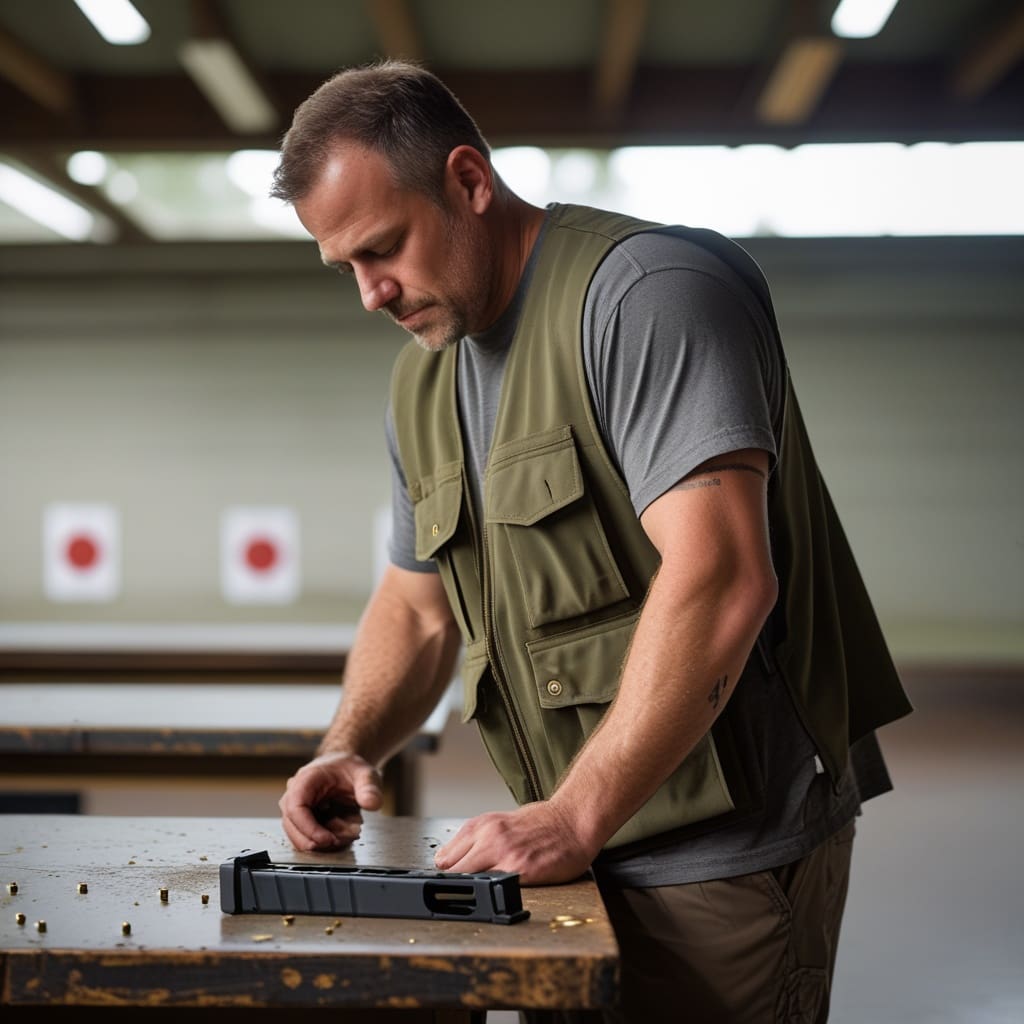
Field stripping is the process of breaking a firearm down into its major components for cleaning and inspection. You don’t fully disassemble the gun. You just take apart the key parts that collect fouling during shooting. Every gun owner needs to know how to do this correctly and safely. This guide covers three of the most common firearm platforms: semi-automatic pistols, AR-platform rifles, and bolt-action rifles. For each one, you’ll get the exact steps, the tools you need, and the mistakes that trip up beginners. Key Takeaways Always verify the gun is unloaded — drop the magazine, lock the slide or bolt back, and visually inspect the chamber before you touch anything else. Field stripping is not full disassembly — it breaks the firearm into major groups only, which is enough for routine cleaning after a range session. No special tools required for most platforms — a pistol disassembly tool, a cleaning rod, and a punch set cover the vast majority of field strip tasks. Reassembly is just as important as disassembly — a gun put back together wrong can fail to fire or cause a dangerous malfunction. Every platform has its own sequence — pistols, AR-15s, and bolt-actions each follow a different disassembly order, and skipping steps creates problems. Function check every time — after reassembly, always run a manual function check before loading the firearm. What Does Field Stripping a Gun Actually Mean? Quick Answer: Field stripping means disassembling a firearm into its major component groups — barrel, slide or bolt, frame, and recoil system — without removing every small part. It takes 2 to 5 minutes and is done before and after every cleaning session. Full disassembly — also called detail stripping — involves removing every pin, spring, and small component inside the gun. Gunsmiths do this for deep inspection or repairs. Field stripping is the everyday version. It gives you access to the bore, the bolt face, the feed ramp, and the recoil system without requiring specialized knowledge or many tools. Think of it like changing your car’s air filter instead of rebuilding the engine. You’re doing the maintenance that actually matters for day-to-day function. When Should You Field Strip a Gun? You should field strip your firearm after every range session, before storing it long-term, and any time it’s been exposed to rain, mud, or extreme dust. Most manufacturers recommend a basic field strip and clean after every 200 to 500 rounds, depending on the platform and ammunition type. What Tools Do You Need to Field Strip a Gun? Quick Answer: Most field strips require only your hands, a cleaning rod, and a nylon or brass punch. Some pistols include a disassembly tool. AR-platform rifles may need a takedown punch or a pivot pin tool for stubborn pins. Field Strip Tool Reference by Platform Platform Required Tools Optional Tools Typical Strip Time Semi-Auto Pistol (Glock, M&P, SIG) Fingers only (most models) Disassembly tool, cleaning mat 60–90 seconds AR-15 / AR-10 Punch or pivot pin tool Bench block, armorer’s wrench 2–4 minutes Bolt-Action Rifle Fingers only (most models) Cleaning cradle, rod guide 1–2 minutes 1911-Pattern Pistol Bushing wrench, flat-head screwdriver Cleaning mat, punch set 3–5 minutes A quality cleaning mat protects your work surface and keeps small parts from rolling away. This matters most with the 1911 platform, which has a recoil spring plug under tension that can launch across the room if you’re not careful. How Do You Field Strip a Semi-Automatic Pistol? Quick Answer: For most semi-auto pistols, unload the gun, lock the slide back, rotate the takedown lever or push the takedown tabs, release the slide forward, then pull the slide off the frame. The recoil spring and barrel lift straight out. Step-by-Step: Glock Field Strip The Glock is one of the most common pistols in the world, and its field strip procedure is almost identical across all Glock models from the Glock 17 to the Glock 43X. Remove the magazine. Press the magazine release button and pull the magazine free from the grip. Lock the slide back and check the chamber. Pull the slide fully rearward, lock it open with the slide stop lever, then look directly into the chamber. Confirm it is empty. Release the slide. Press the slide stop lever down and let the slide ride forward to the closed position. Pull the trigger. With the gun pointed in a safe direction and the chamber confirmed empty, press the trigger to release the striker. This is required on Glock pistols before the slide will come off. Pull down on the takedown tabs. Grip the slide with your non-dominant hand. Use your dominant hand’s thumb and index finger to pull down simultaneously on both small polymer tabs inside the trigger guard, just above the frame rail. Push the slide forward and off the frame. While holding the tabs down, push the slide forward off the front of the frame. It will separate cleanly. Remove the recoil spring assembly. Lift the recoil spring (a captured spring on a guide rod) up and forward out of the slide. Remove the barrel. Tilt the rear of the barrel up and lift it out of the slide. You now have four components: the frame, the slide, the recoil spring assembly, and the barrel. That’s all you need for routine cleaning. Step-by-Step: SIG Sauer P320 / P365 Field Strip Remove the magazine and lock the slide back. Visually and physically check the chamber. Rotate the takedown lever (located on the left side of the frame, just above the trigger guard) 90 degrees downward. Pull the slide forward and off the frame. No trigger pull is required on the P320 or P365. Remove the recoil spring and barrel in the same sequence as the Glock. Step-by-Step: 1911 Field Strip The 1911 has been in production since 1911 and requires a few more steps than polymer-framed pistols. You’ll need a bushing wrench for the barrel bushing at the muzzle end. Remove the magazine and verify the chamber
Mastering Firearm Maintenance: A Comprehensive Guide on How to Clean a Gun

Owning a firearm is a big responsibility, and keeping it in good shape is part of that. It doesn’t matter if you’re a seasoned shooter or just starting out, knowing how to clean your gun is really important. This guide is all about making sure your firearm works right and stays safe, especially after you’ve been to the range. We’ll go over the basics, from making sure it’s safe to handle, to giving it a good clean and putting it away properly. Let’s get started on how to clean a gun the right way. Key Takeaways Always double-check that your firearm is unloaded before you start cleaning. Safety first, every single time. Setting up a clean, well-lit space makes the whole process easier and helps you keep track of parts. Taking your firearm apart according to the manual is key, but know when a simple field strip is enough versus a more detailed clean. Lubrication is vital for smooth operation, but don’t go overboard – just enough to protect moving parts. After cleaning and putting it back together, always do a function check to make sure everything works as it should. Prioritizing Safety Before You Begin Before you even think about touching a cleaning rod or a patch, the absolute first thing you need to do is make sure your firearm is safe to handle. This isn’t just a suggestion; it’s the most important step in the whole process. Skipping this can lead to really bad outcomes, and nobody wants that. Triple-Check Unloaded Status This is non-negotiable. You need to be 100% certain your firearm is unloaded. Don’t just assume because you think you unloaded it last time. Go through the motions every single time. Remove the magazine, open the action, and visually inspect the chamber. Then, physically check it too. A quick glance isn’t enough. Take a moment, be deliberate. It’s better to be overly cautious than to have an accident. Establish A Dedicated Workspace Find a spot where you can focus. A well-lit area is best, so you can see what you’re doing. Try to keep it clean and organized. You don’t want small parts rolling away or getting mixed up with other stuff. A dedicated space helps you concentrate and reduces the chances of losing something important or getting distracted. Think of it as your gun-cleaning command center. Wear Appropriate Safety Gear Even when you’re just cleaning, it’s smart to wear safety glasses. You never know when a spring might pop or a bit of debris might fly off. Gloves are also a good idea, especially if you’re using cleaning solvents. They protect your hands from chemicals and keep the oils from your skin off the gun parts. It’s a simple step that adds an extra layer of protection. Disassembling Your Firearm With Care Taking your firearm apart might seem a bit intimidating at first, especially if you’re new to gun ownership. It’s like opening up a complex watch – you want to be careful and know what you’re doing. But honestly, it’s a necessary step for a good cleaning. Think of it as giving your firearm a proper check-up. We’re not talking about taking every single screw out, but getting to the parts that really need attention. Consult Your Firearm’s Manual Every gun is a bit different, right? That’s why the first thing you should do is grab the manual that came with your specific firearm. It’s not just a booklet; it’s your personal guide. It’ll show you exactly how to take your particular model apart safely and correctly. Trying to guess or follow generic instructions can lead to trouble, like not being able to put it back together or, worse, damaging something. So, yeah, read the manual. It’s worth it. Understand Field Stripping Basics For most regular cleanings, you’ll be doing what’s called “field stripping.” This is a basic level of disassembly that lets you access the main parts for cleaning, like the slide, barrel, and frame. It’s usually pretty straightforward and doesn’t require special tools. The exact steps vary a lot between different types of firearms – a semi-automatic pistol is different from a bolt-action rifle, for example. The goal here is to get enough access to clean out the gunk without going overboard. Here’s a general idea of what field stripping often involves: Remove the Magazine: Always the first step, just to be sure. Open the Action: This could mean pulling back the slide on a pistol or opening the bolt on a rifle. Remove Key Components: Depending on the firearm, this might involve removing the slide from the frame, taking out the barrel and recoil spring assembly, or separating the bolt carrier group. Inspect: Once apart, take a quick look to make sure everything seems okay before you start cleaning. Remember, the goal of field stripping is to get to the areas that accumulate the most carbon and powder residue. It’s designed to be done regularly without special tools or extensive knowledge. Consider Periodic Detail Stripping While field stripping is great for routine cleaning, sometimes your firearm might need a more thorough deep clean. This is where “detail stripping” comes in. It means taking the firearm apart down to its smaller components – things like pins, springs, and the firing mechanism. This isn’t something you need to do every time you clean your gun. It’s more for when you want to give it a really, really good clean, or if you suspect something is really gummed up inside. It can be more complex, so definitely stick to your manual and take your time. If you’re not comfortable, it’s okay to leave this to a gunsmith. The Deep Cleaning Process Alright, now that your firearm is safely disassembled, it’s time to get down to the nitty-gritty of cleaning. This is where you really get into the parts that make your gun work and remove all the gunk that builds up from firing. Cleaning The Barrel Thoroughly The barrel is probably the most