Express delivery and free returns within 30 days
- info@triggerworks.com


If you or someone you know has a felony conviction, one of the first questions that comes up is whether owning a firearm is ever legal again. The short answer is that federal law prohibits felons from owning guns, but the full picture is more complicated than that single sentence suggests.
There are exceptions, restoration pathways, and state-level rules that can change the outcome significantly. This guide walks you through exactly what the law says, where the gray areas exist, and what steps someone in this situation can actually take.
Ready to learn more? Browse our full selection of legal firearms and accessories at the Trigger Works shop.
The core rule comes from the Gun Control Act of 1968, codified at 18 U.S.C. § 922(g)(1). That statute makes it a federal crime for any person convicted of a crime punishable by imprisonment for more than one year to possess, purchase, or transport a firearm or ammunition. That definition captures most felony convictions under both federal and state law.
The penalty for violating this law is serious. A prohibited person found with a firearm can face up to 15 years in federal prison under current sentencing guidelines. Federal prosecutors treat these cases aggressively, and a second offense can trigger mandatory minimums.
It is worth noting that the ban covers more than just physical possession. Constructive possession, meaning having legal control over a firearm even if it is not on your body, counts too. If a felon lives in a home where firearms are stored and accessible, that can be enough for federal charges.

Not every criminal record triggers the ban automatically. The key threshold is whether the underlying offense carried a potential sentence of more than one year. Most state felonies clear that bar, but there are exceptions worth understanding.
State misdemeanors punishable by two or more years also qualify under the federal definition. On the other hand, certain white-collar offenses or regulatory violations that are technically felonies may fall into narrower categories. The type of crime matters less than the maximum sentence attached to it.
A few specific conviction categories get their own sections of federal law. Domestic violence misdemeanor convictions, for example, trigger a separate ban under the Lautenberg Amendment at 18 U.S.C. § 922(g)(9). Someone with a domestic violence misdemeanor is federally prohibited from owning guns even though it is not a felony.
| Conviction Type | Federal Gun Ban Applies? | Notes |
|---|---|---|
| State felony (1+ year potential) | Yes | Covers the vast majority of felonies |
| Federal felony | Yes | Same threshold applies |
| State misdemeanor (2+ year potential) | Yes | Treated as felony equivalent federally |
| Domestic violence misdemeanor | Yes | Separate ban under Lautenberg Amendment |
| Minor misdemeanor (under 2 years) | Generally No | State law may still impose restrictions |
| Juvenile adjudication | Usually No | Varies if tried as an adult |
States are free to add their own restrictions beyond the federal baseline, and many do. Some states permanently ban firearm ownership after any felony conviction, with no pathway to restoration. Others build in automatic restoration after a set number of years following release or after completing probation or parole.
North Carolina, for example, operates under N.C. Gen. Stat. § 14-415.1, which makes it a Class G felony for any convicted felon to possess a handgun or other dangerous firearm. The state ban runs parallel to the federal one and carries its own penalties. Restoration is possible in North Carolina, but it requires a formal petition process through the courts, not just the passage of time.
The key takeaway is that state law and federal law must both allow ownership before a person is legally clear. Meeting one standard but not the other still leaves someone in violation. Always check both layers before drawing any conclusions.
Many people assume that an expungement automatically restores firearm rights. That assumption is often wrong, especially under federal law. Federal courts have held that an expungement under state law does not necessarily remove the federal disability unless the expungement specifically restores civil rights including the right to possess firearms.
A presidential pardon for a federal conviction can restore rights if the pardon explicitly does so. State pardons operate similarly. The document itself must address the restoration of civil rights or the gun disability will remain, regardless of what the person believed when they received the pardon.
Getting legal advice specific to your jurisdiction is critical here. The rules around expungements, pardons, and rights restoration are technical, vary by state, and can have life-altering consequences if misunderstood.

There are genuine legal avenues for restoring firearm rights, but none of them are automatic or simple. The most common routes include a governor’s pardon, a judicial certificate of relief, or a formal petition for restoration of rights. Each state handles this differently, and the process can take years.
Under federal law, 18 U.S.C. § 925(c) once allowed individuals to apply to the Bureau of Alcohol, Tobacco, Firearms and Explosives (ATF) for a relief from the federal firearms disability. Congress has defunded that program for decades, meaning the ATF cannot process those applications today. The only realistic federal path is a presidential pardon or overturning the underlying conviction entirely.
At the state level, some jurisdictions have structured programs that are more accessible. A few states grant automatic restoration after completing a sentence with no violations. Others require a waiting period and a clean record. An attorney who handles firearms law in your specific state is the most reliable source for understanding exactly what is available to you.
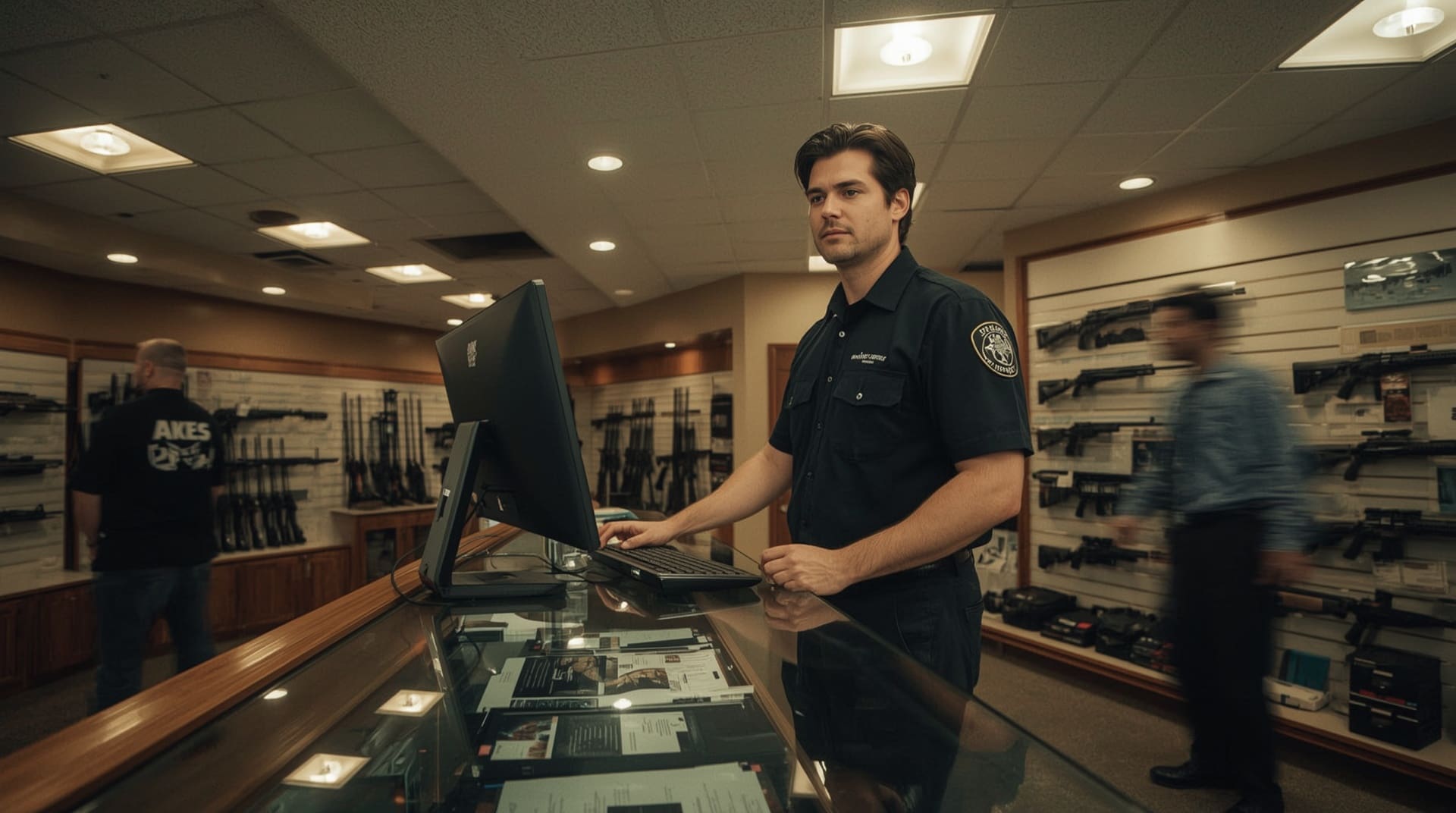
When someone attempts to purchase a firearm from a federally licensed dealer, the dealer runs a National Instant Criminal Background Check System (NICS) check. That system flags individuals with disqualifying records, including felony convictions. A flagged record results in a denial, and attempting to purchase while prohibited is itself a federal crime.
Private sales between individuals in states without universal background check laws present a different situation. Federally, even a private sale to a known prohibited person is illegal for both parties. The buyer cannot legally receive the firearm, and the seller cannot legally transfer it knowing the buyer is prohibited.
Some people believe that private sales are a legal gray area that avoids the background check requirement. They are not. The prohibition on felons possessing firearms does not depend on how the firearm was obtained. Receiving a gun as a gift, inheriting one, or purchasing privately does not change the federal ban.
One of the most persistent myths is that completing a prison sentence fully restores all civil rights, including firearm rights. That is not accurate under federal law. Serving time, finishing parole, and paying all fines does not automatically lift the gun prohibition. The legal disability remains until specifically removed through a formal process.
Another misconception is that non-violent felonies are treated differently. Federal law does not currently distinguish between violent and non-violent felonies when applying the firearms ban. A conviction for tax fraud carries the same gun prohibition as a violent felony, assuming both exceed the one-year threshold. There has been ongoing legal debate about this distinction, especially following the Supreme Court’s 2022 decision in New York State Rifle and Pistol Association v. Bruen, which shifted how courts analyze gun regulations historically. Cases challenging the non-violent felon ban are working through the courts, but the federal statute remains in force.
A third myth is that living with a licensed gun owner solves the problem. A felon living in the same home as legally owned firearms can still be charged with constructive possession if those firearms are accessible to them. Proper storage that restricts the felon’s access can reduce risk, but the safest approach is for firearms to be stored outside the home entirely while a prohibited person lives there.
The consequences of a felon being caught with a firearm are severe. Federal charges under 18 U.S.C. § 922(g) carry penalties of up to 15 years. If the firearm was used in connection with another crime, sentencing enhancements under the Armed Career Criminal Act can push the sentence to a mandatory 15-year minimum for those with three prior qualifying convictions.
State charges can pile on top of federal ones. In North Carolina, being charged under the state felon-in-possession statute while also facing federal charges is a common scenario. Defendants can be prosecuted in both court systems simultaneously because of the dual sovereignty doctrine, meaning the Double Jeopardy clause does not prevent both prosecutions.
Beyond prison time, a new conviction would almost certainly eliminate any remaining hope of rights restoration. Courts and pardon boards look unfavorably on new criminal activity, and a second felony conviction typically closes most restoration pathways permanently.
Anyone with a felony conviction who wants to understand their current legal status should consult a firearms attorney or a criminal defense attorney with specific experience in weapons charges and rights restoration. General practice attorneys often lack the detailed knowledge this area requires.
Legal aid organizations in some states offer free or reduced-cost consultations for people seeking to restore civil rights. State bar referral services can connect you with attorneys who specialize in this area. In North Carolina, the North Carolina Prisoner Legal Services and several nonprofit legal clinics work on rights restoration cases.
Doing this correctly the first time matters. Relying on informal advice, online forums, or assumptions about what the law says is how people end up facing new federal charges. The stakes are too high for anything less than qualified legal guidance.
The direct answer to whether felons can own guns is that federal law prohibits it, and most state laws reinforce that ban. There are legal pathways to restoration, but they require formal legal action, take time, and are not guaranteed. No amount of time served, no completed probation, and no informal understanding changes that reality without official legal action.
If you are in this situation or know someone who is, the most responsible step is to consult a qualified attorney before making any decisions involving firearms. Understanding the full legal picture protects both your freedom and the safety of everyone around you.
No. Completing parole does not automatically restore firearm rights under federal law. The federal disability under 18 U.S.C. § 922(g) remains in place after parole ends unless specifically removed through a pardon, court order, or other formal restoration process. State rules vary, so check your state’s specific statute as well.
Under federal law, antique firearms, which are generally defined as firearms manufactured before 1899 and certain black powder or muzzleloading replicas, are not classified as “firearms” under the Gun Control Act. This means federal law may not prohibit a felon from possessing a true antique muzzleloader. However, many states have their own definitions and restrictions, so this is not a universal loophole. Verify your state law before relying on this distinction.
Proximity alone is not the same as possession. A felon can legally be in the same space as someone who is lawfully carrying a firearm, as long as the felon does not have access to, control over, or constructive possession of the weapon. The risk increases in situations like a shared home where firearms are stored. Talk to an attorney if this situation applies to you.
Expungement removes or seals a conviction record. Rights restoration specifically reinstates civil rights that were lost due to conviction, such as the right to vote, hold office, or possess firearms. An expungement does not automatically restore firearm rights under federal law unless the court order explicitly says so. The two are separate legal processes with different effects.
Sometimes. The federal statute at 18 U.S.C. § 921(a)(20) says that a conviction for which civil rights have been restored is not considered a conviction for federal firearms purposes, as long as the restoration does not prohibit the use of firearms. If your state restoration explicitly restores the right to possess firearms, the federal ban may be lifted for that state conviction. Federal convictions require a separate federal remedy. This area is legally complex, and an attorney should review your specific situation.